Writing Prompts/Exercises Continued: #11-20.

Here’s another 10 writing prompts/exercises for you. I have tried to keep them broad so they could fit with any genre. As I’ve been developing this list, I’ve realized that what I’ve got here are prompts and exercises that may help in strengthening your writing or later be folded into a complete story. If you’re working on a story now, try using these exercises with the characters in that story. If you’re not working on anything at the moment, try using these exercises to help you develop some new characters.

Again, write for only 10-30 minutes and no editing. Have fun and let your imagination run wild.

On the subject of sharing your results. I realized that since the instructions say no editing, many of you (and myself) may not feel comfortable sharing. That’s perfectly okay.

Prompts and Exercises

11.  Your character is interacting with someone who is: (Remember: show, don’t tell)

a.  Insecure

b.  Shy

c.  Narcissistic

d.  Depressed

e.  Happy

f.  Grieving

12.  Your character is chasing something/someone. (Let your imagination go for it!)

13.  Reverse #12: Your character is being chased by something/someone.

14.  Your character is talking about someone he/she is strongly attracted to, perhaps even loves, but is not really aware of the intensity of his/her feelings. Show this in the conversation.

15.  Write a short dialog, but do not use any sort of “he said/she said.” Make sure your reader can follow who is saying what. (Hint: use actions to identify the speakers.)

16. Write a short dialog, but do not use any sort of “he said/she said.” Make sure your reader can follow who is saying what. (Hint: use actions to identify the speakers.)

17. Your character is in a physical fight. Describe at least part of it.

18.   Write the lead-up to a sexual encounter. (SF writers have fun with this but be sure you understand the biology involved.)

19.  Write a sexual encounter for your character. It’s up to you how explicit. (Does your character really want this encounter?)

20.  Write the opening page of a story.


Cognitive Dissonance or How a villain sees herself

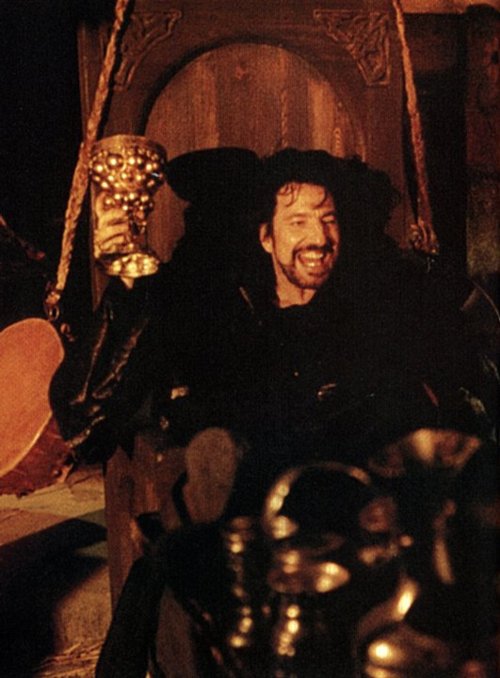
Writing a villain can be fun, particularly if you’re going for humor. Take a look at Alan Rickman’s performance as the Sheriff in “Robin Hood: Prince of Thieves.” It’s absolutely over the top. He portrays the Sheriff as totally evil. The audience ends up laughing. If you want that reaction from your readers, go for it, by all means. (Take a look at The best of Alan Rickman in Robin Hood: Prince of Thieves.)

alan rickman

The difficulty comes when we’re not writing humor. This brings us to the concept of “Cognitive Dissonance.” Back in 1957, Leon Festinger came out with a theory that posited that people strive to maintain internal, psychological consistency. In other words, we strive to make sense of ourselves to ourselves even when we maintain contradictory beliefs. For example: Your character believes himself to be a good person, but is a serial killer. To most of us, this is very contradictory. We often write off such a person as “a monster.” It reduces our own cognitive dissonance. But what about the villain herself? How does she live with herself?

There are several tactics that can be used. Your villain could simply ignore the dissonance or deny reality. She could even call the contradiction “fake news.” (Sorry, I just couldn’t resist.) She could use some sort of justification. “They deserved to die.” This seems to be fairly common across a range of horrendous behavior. The idea in reducing dissonance is to make those contradictory beliefs/behaviors somehow compatible.

Remember that few of us see ourselves as bad, evil. Some do, however.  I think this is often an issue of very poor self-esteem. Dissonance is reduced by agreeing with one side and rejecting the other. Our serial killer might just reject the idea she is basically good and accept that she is evil. I think (without any research), that she would still use some sort of justification such as genetics or upbringing. “I’m evil because it’s in my blood. I come from a long line of evil people.”

Profilers often talk about post-crime behavior as a possible tip-off. They note that after committing the crime, the perpetrator often displays a change in behavior. Maybe she starts drinking a lot, or becomes reclusive, or any of a myriad of behaviors that aren’t typical. I wonder if this change is driven by the dissonance and attempts to reduce it.

The bottom line here is that even your villain has to make some sense of herself to herself. She can do this through denial, justification or acceptance of one belief and rejection of the other. Her behavior may change as she grapples with her cognitive dissonance and this can be a tip-off to investigators or witnesses.

In this post, I have talked mostly about “villains,” but the concept applies to any and all of your characters. It applies to all people, though beliefs are likely to differ based on culture. In writing your characters, it might be helpful to try to get into the head of each of your major characters and think about how each justifies herself to herself. You might just end up with much more believable characters.


Needs and Motivations

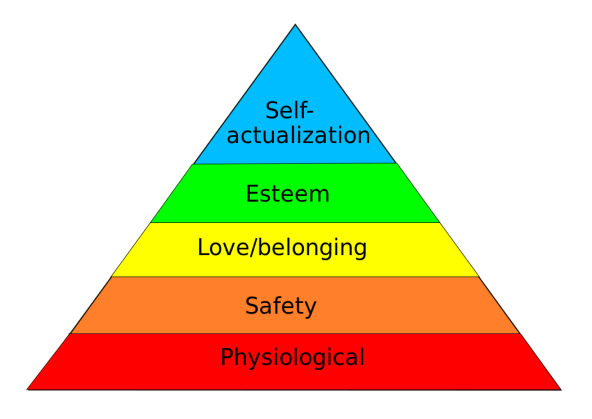
The past several years have been difficult. At last, my life is improving and I feel like writing again. Many years ago (actually in 1943), Maslow published his Hierarchy of Needs. At the bottom are Physiological (food, water, sleep) and Safety. Until these are assured, the later, higher level needs generally won’t be of much importance. For me, my writing fulfills the highest need: Self-actualization. It also touches on Love/Belonging and Esteem. Here’s the usual graphic of Maslow’s Hierarchy.

1052px-maslowshierarchyofneeds-svg


Now that I’ve got those basic needs taken care of, I can turn to the higher needs and begin fulfilling them. I’ve set aside several hours each morning to work on writing.

Character Motivation

This is a basic way to view the motivations of your characters, both the good guys and the bad guys. The cliché of a person stealing food is familiar to most of us. But what about a character who kills another over access to water? Can you think of a scenario where access to air is a critical factor for one of your characters? This might be a good motivation for a science fiction story, but then I’m probably biased. 😉

Of course, how a person reacts to the lack of various needs will depend on the individual. A child who grows up experiencing frequent hunger is likely to have a large focus on food in later life. He or she might become obese. Or possibly a farmer or grocer. Maybe a biologist working to increase the yield of crops. Can you think of other reactions? The idea here is to make the reaction logically consistent with the denied need from childhood.

None of this implies that the individual is aware of his/her motivation at this level. Most people just aren’t that self-aware. A serial killer who kills prostitutes could justify his/her behavior by proclaiming a “moral” motivation. “They are an abomination and must be eliminated.” But what underlies that might be a need for safety and thus striving to eliminate the threat he/she feels the prostitutes pose. While your character might not understand his or her motivations, you, the writer, should keep needs and motives in mind. Your characters will benefit by becoming that much more realistic.


ASSIGNMENTS:

  1. Go through the needs listed in the Wikipedia article and come up with characters that are motivated by the different needs. You might not like all the ideas you come up with, but you might just create an interesting situation and decide to pursue it.
  2. Pick a book and list out the needs motivating the major characters. You can also do this with a movie.

Obsessive Compulsive Disorder and Obsessive Compulsive Personality Disorder

monk


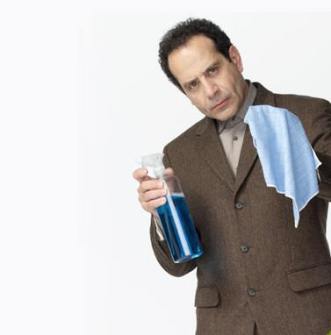
Most of you have probably seen a character on tv who suffers from obsessive-compulsive disorder. Baby boomers can refer to The Odd Couple and the character of Felix Unger. You younger folks have probably seen Monk and its iconic character Adrian Monk. Just how well these shows depicted this disorder is complicated. First off, we need to distinguish between Obsessive-Compulsive Disorder (OCD) and Obsessive Compulsive Personality Disorder (OCPD).

N.B.: I just realized that a new The Odd Couple has been shown on CBS. I didn’t see it, so I can’t make any comment.

felixunger


Obsessive-Compulsive Disorder (OCD)

According to the National Institute of Mental Health, OCD is a chronic and long-lasting disorder that involves uncontrollable recurring thoughts (obsessions) and behaviors (compulsions). The sufferer feels compelled to repeat these thoughts and behaviors again and again, even though he/she realizes they are absurd. Typical obsessions include:

  • Fear of germs
  • Having things in symmetrical or perfect order
  • Fear of dirt
  • Superstitious ideas about lucky or unlucky numbers

You can find more here.

Compulsions are repetitive behaviors the person with OCD does in response to the obsessive thoughts. So the above obsessions could lead to:

  • Excessive hand washing
  • Ordering or arranging things in a specific, precise way
  • Excessive cleaning
  • Compulsive counting

Part of the definition for OCD is that the behaviors and/or thoughts take up at least an hour out of the day and that they cause significant problems in daily life. The person with OCD can’t control these thoughts and behaviors despite awareness that they are excessive. It’s also important to remember that the person with OCD doesn’t get pleasure out of these thoughts and behaviors, although they might feel some relief from anxiety when they have performed the compulsive behavior.

The onset of OCD  is often in childhood or early adulthood, usually before the age of 25. Symptoms typically wax and wane.

Treatments include both medications and therapy. Medications often used include selective serotonin reuptake inhibitors (SSRIs) like Prozac, Paxil and Zoloft. Sometimes atypical antipsychotics like Risperdal or Abilify are used. Cognitive Behavioral therapy (CBT) is often used in the treatment of OCD. The prognosis is good, particularly for children and adolescents.


Obsessive Compulsive Personality Disorder (OCPD)

While Obsessive Compulsive Personality Disorder (OCPD) shares some features with OCD, it is different. The person with OCD finds their thoughts and behaviors unwanted, while the person with OCPD believes their thoughts and behaviors are correct. These individuals are preoccupied with

  • Rules
  • Orderliness
  • Control

It typically begins in the teen years or early 20s, somewhat later than seen with OCD.

People with OCPD can become quite upset when others try to interfere with their rigid routines. Often anger is not expressed directly and may instead express anxiety or frustrations, feelings that they believe are more appropriate.

The key is a need to be perfect, but it is this perfectionism that often leads the person to fail to complete tasks. Emotional closeness is difficult, since the person with OCPD often feels a lack of control in intimate relationships. Flexibility is not to be found in this individual. According to MedLine Plus, other signs of OCPD include:

  • Over-devotion to work
  • Not being able to throw things away, even when the objects have no value
  • Lack of flexibility
  • Lack of generosity
  • Not wanting to allow other people to do things
  • Not willing to show affection
  • Preoccupation with details, rules, and lists

Treatment often involves either psychotherapy or medications or both. The prognosis is fair.


TV Portrayals

So, what have the writers of Monk and The Odd Couple gotten right and what have they gotten wrong? Let’s look first at Adrian Monk. (Please note that I’m getting a lot of my information about the show from Wikipedia.) First off, many of the funny behaviors Monk displays are the result not of OCD or OCPD, but of his multiple phobias. It is true, however, that some of the phobias may actually be more like obsessions. The backstory here is that Monk developed his psychological problems after his wife was killed. Thus, the age of onset is somewhat out of limits for either OCD or OCPD. The dramatic precipitant is also quite unusual for these disorders. The episode in which Monk takes a “new” medication and is instantly “cured” in more than a little problematic. As noted on Health24.com, Monk’s multitude of symptoms are not typical and smack of excessiveness. OCD is hard enough to live with. The authors, however, do point out that the show raised awareness and treated Monk sympathetically, so there are some redeeming factors here.

Turning now to The Odd Couple’s Felix Unger, we see a man obsessed with neatness and order, who is also a hypochondriac. He doesn’t seem to enjoy much in life and his marriage is in shambles due to his behavior. The preoccupation with cleanliness and order sounds a lot like OCPD. The strained interpersonal relationships is quite consistent with this disorder. This portrayal is much more understated than Monk and comes across as more realistic. The movie came out in 1968, long before the current definition of either OCD or OCPD.


The OCD/OCPD Character

If you chose to include a character with OCD/OCPD in your story, go for it. These disorders can provide a lot of conflict and difficulties for your story. You don’t need to restrict these disorders to secondary characters either. They could provide excellent “flaws” for your protagonist. In the tv show Monk, the titular character’s OCD/OCPD is supposed to help him see details that others miss. At the same time, it complicates his solving the crimes due to the impact of his illnesses on daily functioning. We can also look to Felix Unger to see how OCD/OCPD can impact interpersonal relationships.

What about giving your antagonist OCD/OCPD? Handled well, this could provide some sympathy for the antagonist. If the antagonist has OCD, he/she is aware his/her behavior is excessive but can’t seem to stop. If the antagonist has OCPD, he/she would believe that his/her behavior is appropriate and right. Either way, these disorders can give quite a bit of dimension to your character.

My advice is to avoid the excessiveness seen in Adrian Monk. OCD and OCPD are fertile grounds for character features and don’t need to be overdone.


References:

Everyday Health: http://www.everydayhealth.com/anxiety-disorders/experts-common- obessions-and-compulsions.aspx

MedLine Plus: https://www.nlm.nih.gov/medlineplus/ency/article/000942.htm

National Institute of Mental Health: http://www.nimh.nih.gov/health/topics/obsessive- compulsive-disorder-ocd/index.shtml

Ilse Pauw (Clinical psychologist) and Olivia Rose-Innes, Health24, November 2005,             http://www.health24.com/Mental-Health/Disorders/Monks-OCD-Fact-or-fiction- 20120721

Stanford University: http://ocd.stanford.edu/about/

Wikipedia: Monk (TV Series) https://en.wikipedia.org/wiki/Monk_%28TV_series%29



Narcissism

I thought this topic might be apropos given all the attention Donald Trump has been getting lately. I don’t know if he really fits the definition of Narcissistic Personality Disorder, but he still seems to have a large dose of this personality trait.

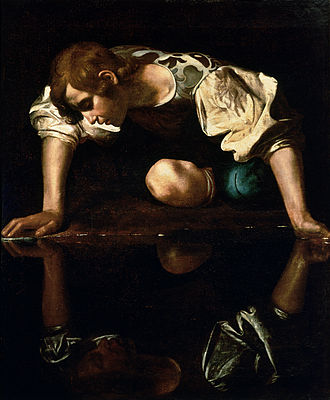
So, what does a narcissist look like? DSM-5 lists the following (see Wikipedia):  Impairment is self-functioning and impairment in interpersonal functioning). This definition is for the personality disorder. Narcissists are very taken up with how great they are and seek out confirmation of this opinion in the views of others. In my experience, narcissists very often have what’s been called “I love me” walls: Prominent displays of anything that might show the world how wonderful the person is. Included would be degrees, photos with prominent people, news clipping that mention the individual. They show little empathy for others and rarely, if ever, apologize for errors (’cause of course there’s no way I could make a mistake). Relationships are superficial and often status-based. The narcissist is often grandiose and self-important. Towards others, he or she is likely to be condescending. Narcissists are often attention-seeking and love to be in the limelight.

Does kinda sound like Mr Trump, doesn’t it? He might be a good image to hold in mind as you develop your own narcissistic character. Of course, a female character could also be a narcissist. Off-hand, I’m having trouble thinking of a good example, so feel free to leave a comment and note female narcissists. I’d love to hear your ideas.

Narcissism isn’t always a disorder. Sometimes it appears as part of other disorders, particularly anti-social personality disorder and/or psychopaths. It is also part of a healthy personality! Yes, you heard me right…a healthy person needs to have a dose of narcissism in terms of a sense of worth. Just be careful it doesn’t go too far!

Let’s talk about narcissism. I’d love to get your impressions and thoughts. These sorts of characters can be fun to develop and can make great antagonists. They can also be used in other ways in stories. What about a friend of the protagonist? or a love interest of the protagonist? Oooh, the complications!  Or…what about an alien species that is generally narcissistic? What sort of society might they develop? I’ll guarantee that it won’t look like ours!

330px-Narcissus-Caravaggio_(1594-96)_edited

Impinging becomes onslaught

I know I haven’t been here very much, but things have been very difficult for me. My mother has COPD and various other ailments. After her last hospitalization a couple months ago, it was recommended that she be hooked up with hospice services. I did that and they’ve been really wonderful. The trouble is, Mother is really declining and I’m upset enough that I can’t think straight. And with all these feelings going on, writing about mental illness, particularly the article on depression that I’ve been working on…well, it’s just a bit too much for me. I know that things will chance with time and that someday I’ll be able to write about depression and various other issues for you guys. Maybe, in the interim, I’ll work on something not quite so close. We’ll see how that goes.

A character dealing with a dying parent would surely evoke strong sympathy in readers. Be sure you give such a character a strong support system or have her break down and become barely functional. There is the emotional toll that care taking a dying parent takes, and there’s also the physical demands.

More at a later time

Little research on mass murder

Ever since the mass shooting on Fort Hood on 5 Nov 2009, I’ve been interested in the psychology of mass murderers. Being the kind of person I am, I turned to Amazon, searching for books on the subject. I found a lot on serial killers and some on school shooters, but almost nothing on mass murderers. I’m not sure I understand why. It is true that many of these killers are themselves killed before any interviewing or interrogation can be done. Still, I’d think there’d be at least some information, some research into what’s going on with these folks.

Just speculating, it seems to me that the motivations are varied. There seems to be one subset that includes individuals like the killer on trial right now in Colorado who is blatantly psychotic or at least extremely mentally ill. The Virginia Tech shooter seems to have fallen into this category as well.

Then we have the subset of killers who shoot up the work-place. Oddly, I’ve seen little research into what’s going on with these folks.

There has been speculation that Charles Whitman, who shot people from the bell tower at the University of Texas in Austin so many years ago, had some brain tumor. More recently, however, I’ve read that the odds are slim that this tumor had anything to do with his behavior that day.

And now we have the shooter in South Carolina who vocalized a desire to kill African-Americans. So, “it’s a hate crime.” Toss it off with an easy generalization and be done with it. But how does a 21 year old develop such hatred and anger to end up doing what he apparently did? Putting the label on him as “racist” doesn’t really tell us much. As a writer of fiction, if I had a villain who was a mass murderer of some racial group, but didn’t go any further than characterize him as a “racist”, I’d be criticized that my character is made of nothing but cardboard, a caricature. To do that villain justice, I’d need to understand how that hatred developed and I’d need to ground this in some sort of reality about racism (or whatever it is that motivate a mass murderer).

If any of you out there have any insights on mass murderers, please make a comment or contact me. I’d love to hear from you.

What Do You Want To See?

This morning I’d like to try something different, my fellow writers. I’ve set up a poll so you can let me know what you’d like me to blog about. Do you have a Work-In-Progress (WIP) with a character who’s depressed and you’d like more information about what that’s like for the character? Do you have a character taking medications and wonder about the side-effects? (Remember, I’m not a psychiatrist.) Do you want to see more of my own writing (Gasp!)?


Your character sees a psychiatrist

Let’s suppose you don’t want to have you character hospitalized but he needs to see a shrink of some sort. How do you handle this?

First off you need to decide what sort of shrink. Does your character need meds? Let’s say you’ve got a tough guy who can’t see the point of talking about stuff, but his stress level is causing problems on the job. So, he goes to his primary care doc who says: “I don’t prescribe psych meds, but I can send you to a psychiatrist.” Now, if the primary care doc is part of a group, he can make some entries into his computer and the referral is sent. If the doc is on his own, he can make some suggestions. Or Mr. Tough can call his insurance company and see what their procedures are.

So, now Mr. Tough arrives at the psychiatrist’s office. This could easily be quite a while later since demand is high in a lot of places while supply of psychiatrists is low. Nice set-up for some conflict there. “Yes, boss. I’ve got an appointment but the soonest they had was six weeks from now.” What’s a good boss to do?? J.

Mr. Tough finally gets in to see the psychiatrist and checks in with the receptionist who takes insurance cards and has him fill out paperwork, including stuff about privacy. (You don’t really want a discussion about HIPAA, do you? Didn’t think so.) The waiting room is likely to have one or two other people there, or maybe not. Anyway, it’s probably pretty plane with the obligatory magazines scattered on the tables.

Eventually, the psychiatrist comes out and conducts Mr. Tough to the office. Please, do not expect a couch! There will likely be a desk with a couple chairs arranged in front. On the wall, Mr. Tough will likely see the psychiatrist’s diploma. The furnishings are likely to be bland. You never know what someone might find offensive or upsetting. Do not expect Mr. Tough to be sitting in some gorgeous, high-end office. They exist, I’m sure, but in today’s managed care environment, most of us see a doc with rather utilitarian offices. You can add setting details like books and photos. The doc may or may not have a computer on his or her desk. Maybe on a credenza behind the desk.

The initial appointment may last 45 minutes. This allows the doc to get some background and an idea of what’s going on with Mr. Tough. The focus will mostly be on signs and symptoms and any history of mental health problems. This history will include any family history of mental illness since a number of illnesses have strong genetic components. The psychiatrist will then write out a prescription (or several) and suggest that they get together again in a few weeks. Hopefully this will be only a couple weeks so the psychiatrist can check on side effects and well as the impact of the meds on the problem.

Please be aware that many psychotropic meds take a while to “kick in”. This is true particularly of antidepressants.

So, Mr. Tough is given a prescription for antidepressants even though he insists the problem is anger. That happens a lot. The reasoning is that what’s underlying the anger is unhappiness and stress and these meds have been shown to be effective. He may also be given a prescription for something to help him sleep. I’ll discuss some medication issue at a later date since side effects can really give your client some problems to deal with.

When Mr. Tough comes back, the appointment will only be for about 15 minutes and focused on how the meds are doing and any side effects noted. The psychiatrist will, hopefully, be supportive and allow some discussion about the problems in Mr. Tough’s life, but this will be limited. I can’t tell you how many times I’ve had clients come to me, complaining about their psychiatrist’s failure to talk to them about anything other than the meds. It’s just the way things are nowadays in the US. The doctor may or may not change medications around. He’s not likely to refer to a psychologist or social worker.

So, that’s essentially outpatient treatment with a psychiatrist in the US. In a later post I’ll talk about seeing a psychologist on an outpatient basis. As usual, please leave any questions or comments below.

Insanity, Schizophrenia, PTSD, and Eddie Ray Routh

Just some thoughts on the trial and verdict regarding Eddie Ray Routh. Last night (2/24/15) Routh was found guilty of murdering Chris Kyle and Chad Littlefield. The defense had contended that Routh was insane at the time of the murders, but the jury clearly rejected this. I have no information regarding why the jury did so, but likely did feel that Routh “knew right from wrong” when he killed those two men. That is the standard or “test” in Texas and it does seem he knew that at least some of society would determine that what he did was wrong. Routh apparently tried to evade police in the aftermath. He ran.

It was clear (at least to me) that Routh was mentally ill. He reportedly had been diagnosed as schizophrenic by the VA. The reports of hallucinations and delusions back this up. As I will discuss in a later post(s) on PTSD, these are not, I repeat not, symptoms of PTSD. He may have suffered from PTSD as well as schizophrenia. Unfortunately, when his mother reached out to Mr. Kyle for help, she only made note of PTSD and not the schizophrenia. For a long time, the media focused on the reports of PTSD. It’s become somewhat of a fad, I’m sad to say, particularly when dealing with veterans who deployed either to Afghanistan or Iraq. It seems like Americans have become quick to label veterans of the War On Terror who have mental health problems as all suffering from PTSD and likely to become violent. It’s just not true.

Could Routh’s schizophrenia have been triggered by his deployment? Possibly, though not very likely. Could it have been a coincidence that his schizophrenia emerged during this time frame? Yes. Schizophrenia often emerges during a person’s 20s.

What’s the take-away here? I think there are a couple. First, different jurisdictions have different “tests” for calling a person “insane”. As writers, you’ll need to check the test for the state your characters are in. Second, a person can be crazy but still not be insane. This can give you a lot of tension and conflict for your story. Third, be careful when labeling your nut case. Familiarize yourself with the signs and symptoms of the various mental health diagnoses. I’ll do my best to help you with this.