Insanity is a term used widely, and most often incorrectly. We’ve all seen the interviews with bystanders saying some criminal had to be “insane.” We may even have had one of our characters say of another, “She’s insane!” What a layperson means is that the other person’s behavior doesn’t make sense or that the other person is mentally ill. Some people may even believe it’s a term that is used in mental health circles. They’d be wrong. The term “insane” is not a mental health term, but a legal one.
I am not a lawyer and you might want to talk with one if you plan on using the term in your work. Do realize that different states (and countries) have different definitions of insanity. Essentially, the accused is claiming that because of some mental illness or defect he or she shouldn’t be held legally responsible for his or her actions. The insanity defense is rarely used in the US and even more rarely does it result in a ruling of “not guilty by reason of insanity.” Usually it’s the defense that has to show that the defendant meets the standards for such a decision by the jury. In other words, the “burden of proof” lies with the defense.
It’s not enough to show that the defendant is mentally ill. In the early 1970s, Herbert Mullin killed 13 people. He said that voices told him that he could prevent an earthquake in California if he killed. It’s not surprising that his defense initially was “not guilty by reason of insanity.” He was hearing voices; he was clearly mentally ill. But…the jury didn’t buy that defense, primarily because he’d tried to cover his tracks and showed some sign of premeditation in some of his kills. He was found guilty instead and sent to prison. He’ll be eligible for parole in 2021, when he’s 74.
Personally, I don’t think premeditation, by itself, negates an insanity defense. I do think it is possible for a mentally ill person to plan out a crime and carry it through while still meeting the standards or “tests” for a decision of insanity. This might be a good source of some conflict for your story and an interesting cross examination of a psychologist on the stand. Attempts to cover up the crime is more problematic since it suggests that the killer knows that what he or she did was wrong.
Be sure that you don’t have your psychologist or psychiatrist making the determination that your character was insane. That’s something the jury must do.
BTW: an insanity defense is not the same as competency to stand trial. This is a separate determination and looks at whether or not a defendant understands that he or she is being tried for a crime, who’s involved, and if the defendant can assist his attorney(s) in his or her defense. It relates to the time of the trial and not to the time of the crime. You can have your defendant completely psychotic at the time of the crime, but because he’s now on his meds, he’s able to understand the trial and assist his attorneys.
A good resource regarding these issues would certainly be a lawyer. You might also want to get in touch with a forensic psychologist or psychiatrist. These individuals are often called in to develop an opinion regarding both competency and insanity.
So, how do you use this information in your story? Let’s say to have a character, Sam, who goes on a killing spree. It’s Saturday morning and Sam leaves the house carrying the shotgun he’d bought a week ago and a fanny-pack full of cartridges. Let’s say you decide to write this scene from Sam’s point of view. He’s hearing voices that tell him he must kill or he will die. The voices are screaming at him. He shoots his next door neighbor who’s mowing the lawn. He walks further down the road and shoots a passing motorist. Now the voices are encouraging him to kill more, more. Perhaps the people he passes look like some sort of demon to Sam. His own thoughts are barely coherent. Eventually the police stop him and by some miracle Sam survives. Of course to Sam, he doesn’t die because he’d carried out what the voices demanded. Perhaps Sam even surrenders. Great!
You can have the neighbors saying Sam is insane. Particularly if Sam has a history of mental health problems. Maybe the neighbors get into an argument about whether or not Sam’s crazy or just an evil monster. People do this.
You follow up with the evaluations and hearings and trial. You get Sam put on meds and within a few days, the voices have backed off and Sam realizes what’s going on. So you have a shrink determine that he’s competent to stand trial. Now for the wrangle over whether or not Sam was insane at the time of the killing spree. The defense points to a prior diagnosis of paranoid schizophrenia (more about diagnoses in following posts!) and evidence that he’d stopped his medications a few weeks previously. The prosecutor points out that Sam had the foresight to buy a shotgun and cartridges and even a fanny-pack to hold all the cartridges.
Feel free to contact me if you have questions or comments. I’m happy to help.
Update (2/13/15)
The current trial of Eddie Ray Routh, accused in the murder of “American Sniper” Chris Kyle, highlights some of the issues related to legal insanity versus being mentally ill. Kyle apparently texted that Routh was “straight-up nuts.” But police have recounted Routh’s fleeing from the scene and leading them on a chase, which might indicate that Routh was aware what he did was wrong (part of the determination of insanity in Texas). I must say that the CNN commentators I’ve seen are doing a fair job of presenting these issues.
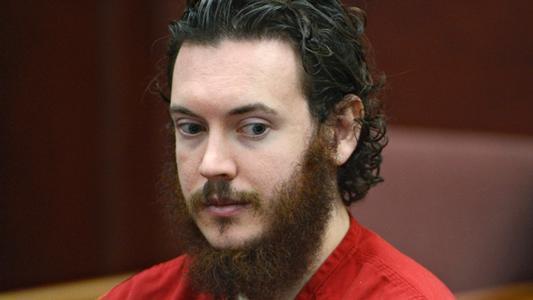 Colorado theater shooting suspect James Holmes
 Psychology and Writers