Life Impinges Sometimes: Stress

Sorry I haven’t been around lately. It’s been a difficult month or so and I find it difficult to write about psychology and mental health problems when I’m upset and stressed myself. Guess it gets just a bit too close. I want to provide you all with the best information I can and I don’t want my own issues and difficulties to unduly slant what I write.

So, is there anything I can learn from the past couple months that I can pass on to you, my readers? Any insights that can help you develop realistic characters? I’m not sure. I’m sorting through my thoughts at this point. I can say that prolonged stress can really alter the way a character (and person!) acts and thinks and feels. Even a highly competent character can realistically be expected to have difficulties when trying to cope with prolonged stress.

This reminds my of some old research on stress. I don’t recall the researchers and I probably don’t have the details right, but when dogs were exposed to electric shock in the floors of a cage and they couldn’t predict or control what was happening, eventually they just ended up cowering in a corner. This led to the development of the idea of “Learned Helplessness.” (I know: the ethics of such research are questionable to me too.) For humans, the reaction may show up in a person (character) staying in bed, or spending all the time playing solitaire or some such game. It’s avoidance and at the same time, a giving up.

Cognitively, the thoughts may be something like “Why bother?” Thinking is difficult and feels muddied or like your character’s head is encased in cotton or molasses. It’s hard to see beyond the immediate. Of course, that tends to keep the stress going in many cases.

The stress your character is going through doesn’t have to be life threatening, like captivity and torture. I would think (I don’t know, haven’t done much reading in this area) that learned helplessness might just develop in such situations also. I would recommend if your character is in such dire straits that you do a bit of research on the effects of torture and prolonged captivity. Amnesty International might be a place to start.

So, what sort of things could set this up? Caring for an elderly, demanding parent; living in an abusive relationship; poverty and inability to make ends meet; chronic illness. The list is probably endless.

Your character sees a psychiatrist

Let’s suppose you don’t want to have you character hospitalized but he needs to see a shrink of some sort. How do you handle this?

First off you need to decide what sort of shrink. Does your character need meds? Let’s say you’ve got a tough guy who can’t see the point of talking about stuff, but his stress level is causing problems on the job. So, he goes to his primary care doc who says: “I don’t prescribe psych meds, but I can send you to a psychiatrist.” Now, if the primary care doc is part of a group, he can make some entries into his computer and the referral is sent. If the doc is on his own, he can make some suggestions. Or Mr. Tough can call his insurance company and see what their procedures are.

So, now Mr. Tough arrives at the psychiatrist’s office. This could easily be quite a while later since demand is high in a lot of places while supply of psychiatrists is low. Nice set-up for some conflict there. “Yes, boss. I’ve got an appointment but the soonest they had was six weeks from now.” What’s a good boss to do?? J.

Mr. Tough finally gets in to see the psychiatrist and checks in with the receptionist who takes insurance cards and has him fill out paperwork, including stuff about privacy. (You don’t really want a discussion about HIPAA, do you? Didn’t think so.) The waiting room is likely to have one or two other people there, or maybe not. Anyway, it’s probably pretty plane with the obligatory magazines scattered on the tables.

Eventually, the psychiatrist comes out and conducts Mr. Tough to the office. Please, do not expect a couch! There will likely be a desk with a couple chairs arranged in front. On the wall, Mr. Tough will likely see the psychiatrist’s diploma. The furnishings are likely to be bland. You never know what someone might find offensive or upsetting. Do not expect Mr. Tough to be sitting in some gorgeous, high-end office. They exist, I’m sure, but in today’s managed care environment, most of us see a doc with rather utilitarian offices. You can add setting details like books and photos. The doc may or may not have a computer on his or her desk. Maybe on a credenza behind the desk.

The initial appointment may last 45 minutes. This allows the doc to get some background and an idea of what’s going on with Mr. Tough. The focus will mostly be on signs and symptoms and any history of mental health problems. This history will include any family history of mental illness since a number of illnesses have strong genetic components. The psychiatrist will then write out a prescription (or several) and suggest that they get together again in a few weeks. Hopefully this will be only a couple weeks so the psychiatrist can check on side effects and well as the impact of the meds on the problem.

Please be aware that many psychotropic meds take a while to “kick in”. This is true particularly of antidepressants.

So, Mr. Tough is given a prescription for antidepressants even though he insists the problem is anger. That happens a lot. The reasoning is that what’s underlying the anger is unhappiness and stress and these meds have been shown to be effective. He may also be given a prescription for something to help him sleep. I’ll discuss some medication issue at a later date since side effects can really give your client some problems to deal with.

When Mr. Tough comes back, the appointment will only be for about 15 minutes and focused on how the meds are doing and any side effects noted. The psychiatrist will, hopefully, be supportive and allow some discussion about the problems in Mr. Tough’s life, but this will be limited. I can’t tell you how many times I’ve had clients come to me, complaining about their psychiatrist’s failure to talk to them about anything other than the meds. It’s just the way things are nowadays in the US. The doctor may or may not change medications around. He’s not likely to refer to a psychologist or social worker.

So, that’s essentially outpatient treatment with a psychiatrist in the US. In a later post I’ll talk about seeing a psychologist on an outpatient basis. As usual, please leave any questions or comments below.

Psychology and Writers: Schizophrenia (Part 1)

Schizophrenia. Yes, it does translate to “split mind”, but that doesn’t mean that we’re dealing with multiple personalities here. Instead the “split” is with reality.

The National Institute of Mental Health (NIMH) has published a nice, concise discussion on schizophrenia here: http://www.nimh.nih.gov/health/topics/schizophrenia/index.shtml. It’s a good place to start. For information on rates of schizophrenia, see the CDC: http://www.cdc.gov/mentalhealth/basics/burden.htm.

Okay, so you’re now armed with gobs of information about schizophrenia. What does that mean for your characters? A lot of mystery writers have as their perpetrator someone with schizophrenia or at least claiming to have schizophrenia. Certainly, some criminals have had schizophrenia. However, it is far more likely that a schizophrenic will be the victim of a crime rather than being the perpetrator. Schizophrenics are also much more likely to attempt suicide than they are to murder. Sure, the delusion that people are trying to kill you can lead a schizophrenic to murder. It’s just not very common at all. So, you can use your schizophrenic as victim, witness or perpetrator.

Now that you’ve decided to have a schizophrenic character, how do you portray him or her? Getting into the pov of such a character will be hard to do convincingly (at least to shrinks like me! J). Your character is likely to be hearing at least one voice that’s saying some pretty nasty things about him or her. The patients I’ve worked with never actually told me what the voices were saying, but did say that the voices were horrible in their comments about the patient. And they couldn’t turn it off!

How untreated schizophrenics think, I just don’t know. None of my patients have ever told me. My guess is that their thinking is jumbled and illogical. According to the NIMH, they have trouble with short-term or working memory. They have trouble using information to make decisions and control their behavior, so they’re likely to act impulsively. They are likely to be fearful if their delusions are of the paranoid sort*.

A few other symptoms are likely to be apparent. One of these is “flat affect”. This means that the individual shows little, if any, emotional response to the things going on around them. Be aware that the medications used to treat schizophrenia can also make the person “flat.” Conversation is likely to be limited and the patient has difficulty following through on plans.

Some patients, rather than being “flat”, do exhibit irritability. I recall one individual, who was not being treated by our clinic, who hung around the smoking area at the hospital where I worked. He appeared angry and quite intimidating. He usually tried to bum cigarettes. While I didn’t give him any (I only brought out one for myself), but I made a point to treat him politely. And he did respond to that, calming a bit and responding nicely. I think, with absolutely no proof, that his irritability was based more on what was going on in his mind. Perhaps he was angry about the voices he heard.

I’m going to end this here with the promise to write more about schizophrenia at a later time. If you have any questions or requests or comments, please let me know.

PS:

I’d like to make a couple comments about the current murder trial of Eddie Ray Routh, accused of killing “American Sniper” Chris Kyle and his friend. The family is claiming two things: that Routh was “crazy” and that he had PTSD. People with PTSD don’t have delusions about demons. They may have flashbacks in which they think they are back in a traumatic situation. Back when I was in the Air Force in the late ‘80’s, an individual came into the ER with a rifle. He believed he was in Viet Nam and that it was 1968. He was disarmed and taken to a mental health unit. This was a flashback, not a delusion. I know it’s hard to make the distinction, but it’s important. So, what’s going on with Routh? I’m not sure. It may be that there are more than one illness going on here. Or maybe just (!) schizophrenia that happened to emerge during or shortly after his deployment. He was the right age.

*“Paranoid” is not being worried or anxious or simply fearful. It’s the belief that someone(s) are plotting against you, trying to harm you.

Exposure Therapy

Caution:  Adult language!


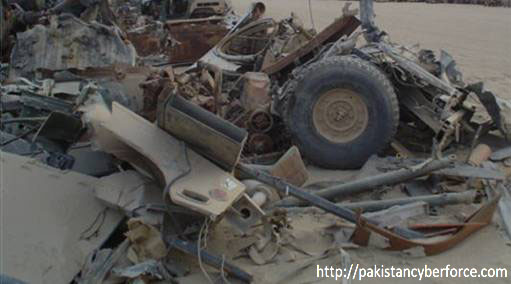
Remains of American-NATO vehicles destroyed in IED attacks in Afghanistan

Sergeant Krista Andrews’s blue eyes glistened with tears. “I should have gone on the mission, doc. I could have done something.”

The late afternoon Texas sun streamed through the office window. Dr. Mark Dowdell frowned. “What?”

She shook her head and the tears fell down her pale cheeks. “I don’t know. Something. I was their medic and I let them down.”

“I see.” Nothing like a stock phrase to buy time, the psychologist thought. He leaned back in his black swivel chair and stared at the framed Crab Nebula print.

For the past nine months, Sgt. Andrews had grappled with her survivor guilt following an attack on a convoy that had left six dead. Dowdell tried Prolonged Exposure, Cognitive Processing, even Virtual Reality therapy. Nothing worked. The young woman just wouldn’t let go of the idea that things would have been better if she’d gone on the mission.

Of course, Dowdell had one more option: send her back in time. Let her try, then bring her back. The Box might be experimental, but the theory–physics and psychology both–was solid. Since the beginning of the decades-long Global War on Terrorism, the accepted treatment for Posttraumatic Stress Disorder involved exposing the client to the traumatizing event. Sgt. Andrews’s case was a variant on PTSD, so it should work. Right?

“Sergeant, would you be willing to participate in a research program?” he asked.

#

Krista sat with the rest of the platoon in the stifling briefing room. The window air-conditioning units wailed in their futile battle against the late July sun. It’ll be worse when the monsoons start in a few more weeks, she reminded herself.

The lieutenant stood in front of a screen with a diagram of the proposed mission. The line of the Pakistani-Taliban advance hovered just north of the border between the state of Punjab and Haryana. A red streak followed back roads north to a point just shy of the front.

“Okay, folks,” the El-Tee said. “Today’s mission is to escort a supply truck to the Indian Army base on the other side of Tohana. First Squad, this one’s yours. Which medic is up?”

Everyone in First Squad groaned, while the rest of the platoon grinned. Krista felt a moment of dizziness, as if the world had just shifted a few centimeters. She shook her head to clear it.

Specialist Martinez, the platoon’s other medic, kept his hand in his lap, even though he was the one scheduled for the next mission. Uh-uhn, Krista thought, not me, not today. Martinez, you’re up. I want to go back to bed. The stocky Specialist often managed to worm his way out of going on a mission. No wonder he was such a lame excuse for a medic. An odd sense of having gone through this all before washed over her. Again she shook her head.

Martinez glanced at her, his shoulders sagging with exhaustion. Earlier, around oh-dark-thirty, Martinez had burst into their billet, shouting, “I’m a dad! I’m a dad!” He’d been awake all night, watching via Internet connection as his wife delivered their first child. Krista gave him a grimacing smile and nodded. Oh, all right. But I swear, it’s the last time I cover for you.

As her hand crept up, Krista felt the world shift again, stronger, as if displaced by a half-meter this time. “I’ll go. Let Martinez get some sleep.”

The nine-person squad, plus Krista, piled into the two sand-colored Light Tactical Vehicles and connected their uniform subsystems to the vehicles’ onboard power supply. The engines turned over and filled Forward Operating Base Sword with their teeth-chattering rumble. The first TeeVee took up position in the lead, while Krista’s vehicle slid into place behind the truck. The convoy eased past the entry control point and onto the lane leading to the main road.

From the back of the second TeeVee, Krista could see the ass-end of the supply truck through the front windshield, but not much else. The high side windows showed only the tops of ficus trees and the washed-out blue sky. At least her uniform’s micro-climate conditioning system kept her cool, though it didn’t block the stench of anxiety-spawned sweat.

As the TeeVees rumbled down the road, Krista checked the telemetry projected from the inner layer each squad member’s uniform. Body temperature, heart rate, blood pressure, hydration level, brain waves, and stress level appeared on her helmet’s visor as a list of green alphanumerics.

Staff Sergeant Carter’s blood pressure was a little elevated, reflecting her increased stress at the start of a mission. The price paid for being squad leader. The increased heart rates and quick pulses of the three newbies spoke a different kind of stress.

Specialist Khan, as usual, was dehydrated. Krista keyed her comm unit. “Khan, drink water. I don’t need a case of heat stroke.”

“Sure, doc.”

The sound of Khan slurping water from his hydration system filled Krista’s helmet. Smart ass.

Delta brainwaves from one soldier in the first vehicle told Krista that Sergeant Shephard was sleeping, again.

The chatter on the radio devolved into a background drone. Krista’s own brainwaves edged toward the drowsy theta frequencies.

The TeeVee hit a pothole and Krista felt the jar streak up her back.

“Motherfucker!” someone yelled. “Look where you’re going, shithead!”

“You want to drive, be my guest, Bates,” the TeeVee’s driver, Corporal Lujan, shouted back.

“Knock it off, soldiers.” Carter’s voice was level, almost bored.

“Like we want Lujan as gunner. The only things he can hit are potholes.”

“Stow it, Bates.” This time there was a snap to Carter’s voice.

Krista checked the squad again. Not much else to do. As a medic, she only got busy when thing went wrong and she could never wish for that. The members of First Platoon, Echo Company were hers. Her responsibility. If the shit hit the fan, she’d take care of them. How many times during her nine months in-country had that happened? Ten? Fifteen? She’d lost count. No wonder she was tired. She just hoped—

“RPG!” Bates screamed from his exposed gunner’s position. “Ambush! Ambush!”

Lujan swerved the TeeVee; Krista’s shoulder banged against the vehicle’s side.

She shifted, tried to right herself.

Noise. Light. Pain. Nothing.

 #

Specialist Jaime Martinez’s dark eyes glistened with tears. “I should have gone on the mission, doc. I could have done something.”
Hello fiction writers!

Have you ever watched media or read a book that got things wrong about your profession? I think most of us have had that experience. I know I have, way too many times and now I want to help change things. Thus this blog. What I want to do is help you, fiction writers, get it right when it comes to writing about psychology stuff. Things like:

  1. How long is a typical hospitalization?
  2. What’s the difference between a psychologist, a psychiatrist and a social worker?
  3. How do schizophrenics act?
  4. What is bipolar disorder?
  5. Are veterans with PTSD “ticking time bombs”?

I’m sure you can think of more questions and I encourage you to ask. If there is a topic you’d like me to address, just say so. Please, though, let’s not talk about your family or friends or yourself. This is not supposed to be a therapy session.

So, what makes me qualified to do this? Well, I’ve been a clinical psychologist for around 30 years. I’ve worked in a variety of settings and with various clients. I’ve worked mostly with adults, so my ability to comment about mental illness in kids might be limited. Also, as a psychologist, I am unable to prescribe medication so my knowledge of meds may also be limited. Of course, I’ve had to pay attention to the medications being used to help my clients so I can address some issues there.

In addition to my professional background, I’ve also been doing some fiction writing myself. I write mostly science fiction and had a short story published a number of years ago in an online magazine. Unfortunately it’s no longer available though I am thinking of reprinting it.