Writing Prompts/Exercises Continued: #11-20.

Here’s another 10 writing prompts/exercises for you. I have tried to keep them broad so they could fit with any genre. As I’ve been developing this list, I’ve realized that what I’ve got here are prompts and exercises that may help in strengthening your writing or later be folded into a complete story. If you’re working on a story now, try using these exercises with the characters in that story. If you’re not working on anything at the moment, try using these exercises to help you develop some new characters.

Again, write for only 10-30 minutes and no editing. Have fun and let your imagination run wild.

On the subject of sharing your results. I realized that since the instructions say no editing, many of you (and myself) may not feel comfortable sharing. That’s perfectly okay.

Prompts and Exercises

11.  Your character is interacting with someone who is: (Remember: show, don’t tell)

a.  Insecure

b.  Shy

c.  Narcissistic

d.  Depressed

e.  Happy

f.  Grieving

12.  Your character is chasing something/someone. (Let your imagination go for it!)

13.  Reverse #12: Your character is being chased by something/someone.

14.  Your character is talking about someone he/she is strongly attracted to, perhaps even loves, but is not really aware of the intensity of his/her feelings. Show this in the conversation.

15.  Write a short dialog, but do not use any sort of “he said/she said.” Make sure your reader can follow who is saying what. (Hint: use actions to identify the speakers.)

16. Write a short dialog, but do not use any sort of “he said/she said.” Make sure your reader can follow who is saying what. (Hint: use actions to identify the speakers.)

17. Your character is in a physical fight. Describe at least part of it.

18.   Write the lead-up to a sexual encounter. (SF writers have fun with this but be sure you understand the biology involved.)

19.  Write a sexual encounter for your character. It’s up to you how explicit. (Does your character really want this encounter?)

20.  Write the opening page of a story.


Fiction Writing Prompts/Exercises

While this is not necessarily psychology related, I thought I’d post this for all of you. This list of prompts/exercises is being developed because I couldn’t find anything like it in the various lists on the Internet. I’ve been looking for prompts or exercises to get my must awake. However, most of those prompts on the net are very restricted and/or seemed to be prompts for stories. They also didn’t work for genre fiction. I wanted a list of short suggestions that at the same time could be used no matter what genre a person is working in.

The idea for this came from a high school creative writing class. The teacher had us write about a character walking. As I remember it, there was supposed to be something distinctive about the walk and it was to be from the point of view of another character who is observing. I loved the exercise. (I must have to recall it so very many years later, even if for the life of me, I can’t recall the teacher’s name.)

In constructing this list, I thought about exercises that would help me and you develop our writing skills. I would suggest that you spend no more than a half-hour on each, though ten minutes should be a minimum. No editing. Write in what that teacher of mine called “white heat.” Just go for it.


Prompts/Exercises 1-10


  1. Write about someone walking, from the point of view of someone watching. (This was from the high school assignment.)
  2. Write a scene in which the weather figures significantly.
  3. Write a scene about a character waiting for another in a bar
    1. The bar is in a casino/hotel
    2. The bar is in a poor or working class section of town
    3. The bar is high class
  4. Write a scene in which a character is visiting a historic landmark.
    1. He/she has been there before
    2. He/she has NEVER been there before
  5. Your character is fixing a meal
  6. Your character comes across a dead body (can be anything)
  7. Without dialog, show you character feeling:
    1. Bored
    2. Angry
    3. Sad
    4. Happy
    5. Anxious
  8. What does your character see outside his/her window?
  9. For some reason, your character is unable to see. Describe what he/she can perceive.
  10. Show your character interacting with a companion animal.


When I get one of these done, I’ll post the result here in comments. If you want to  post your results, please feel free. And, of course, if you have any questions or comments, I’d be happy to hear from you.


What do you want to see? Again.

I’m going to post this again. I’d like you all to let me know what you’d like to see here. Do you have a Work-In-Progress (WIP) with a character who’s depressed and you’d like more information about what that’s like for the character? Do you have a character taking medications and wonder about the side-effects? (Remember, I’m not a psychiatrist.) Is your villain psychotic, psychopathic or borderline but you don’t know what those are? Do you want to see more of my own writing (Gasp!)?


Obsessive Compulsive Disorder and Obsessive Compulsive Personality Disorder

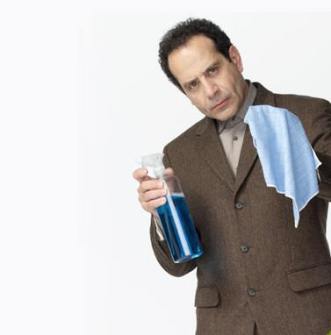
monk


Most of you have probably seen a character on tv who suffers from obsessive-compulsive disorder. Baby boomers can refer to The Odd Couple and the character of Felix Unger. You younger folks have probably seen Monk and its iconic character Adrian Monk. Just how well these shows depicted this disorder is complicated. First off, we need to distinguish between Obsessive-Compulsive Disorder (OCD) and Obsessive Compulsive Personality Disorder (OCPD).

N.B.: I just realized that a new The Odd Couple has been shown on CBS. I didn’t see it, so I can’t make any comment.

felixunger


Obsessive-Compulsive Disorder (OCD)

According to the National Institute of Mental Health, OCD is a chronic and long-lasting disorder that involves uncontrollable recurring thoughts (obsessions) and behaviors (compulsions). The sufferer feels compelled to repeat these thoughts and behaviors again and again, even though he/she realizes they are absurd. Typical obsessions include:

  • Fear of germs
  • Having things in symmetrical or perfect order
  • Fear of dirt
  • Superstitious ideas about lucky or unlucky numbers

You can find more here.

Compulsions are repetitive behaviors the person with OCD does in response to the obsessive thoughts. So the above obsessions could lead to:

  • Excessive hand washing
  • Ordering or arranging things in a specific, precise way
  • Excessive cleaning
  • Compulsive counting

Part of the definition for OCD is that the behaviors and/or thoughts take up at least an hour out of the day and that they cause significant problems in daily life. The person with OCD can’t control these thoughts and behaviors despite awareness that they are excessive. It’s also important to remember that the person with OCD doesn’t get pleasure out of these thoughts and behaviors, although they might feel some relief from anxiety when they have performed the compulsive behavior.

The onset of OCD  is often in childhood or early adulthood, usually before the age of 25. Symptoms typically wax and wane.

Treatments include both medications and therapy. Medications often used include selective serotonin reuptake inhibitors (SSRIs) like Prozac, Paxil and Zoloft. Sometimes atypical antipsychotics like Risperdal or Abilify are used. Cognitive Behavioral therapy (CBT) is often used in the treatment of OCD. The prognosis is good, particularly for children and adolescents.


Obsessive Compulsive Personality Disorder (OCPD)

While Obsessive Compulsive Personality Disorder (OCPD) shares some features with OCD, it is different. The person with OCD finds their thoughts and behaviors unwanted, while the person with OCPD believes their thoughts and behaviors are correct. These individuals are preoccupied with

  • Rules
  • Orderliness
  • Control

It typically begins in the teen years or early 20s, somewhat later than seen with OCD.

People with OCPD can become quite upset when others try to interfere with their rigid routines. Often anger is not expressed directly and may instead express anxiety or frustrations, feelings that they believe are more appropriate.

The key is a need to be perfect, but it is this perfectionism that often leads the person to fail to complete tasks. Emotional closeness is difficult, since the person with OCPD often feels a lack of control in intimate relationships. Flexibility is not to be found in this individual. According to MedLine Plus, other signs of OCPD include:

  • Over-devotion to work
  • Not being able to throw things away, even when the objects have no value
  • Lack of flexibility
  • Lack of generosity
  • Not wanting to allow other people to do things
  • Not willing to show affection
  • Preoccupation with details, rules, and lists

Treatment often involves either psychotherapy or medications or both. The prognosis is fair.


TV Portrayals

So, what have the writers of Monk and The Odd Couple gotten right and what have they gotten wrong? Let’s look first at Adrian Monk. (Please note that I’m getting a lot of my information about the show from Wikipedia.) First off, many of the funny behaviors Monk displays are the result not of OCD or OCPD, but of his multiple phobias. It is true, however, that some of the phobias may actually be more like obsessions. The backstory here is that Monk developed his psychological problems after his wife was killed. Thus, the age of onset is somewhat out of limits for either OCD or OCPD. The dramatic precipitant is also quite unusual for these disorders. The episode in which Monk takes a “new” medication and is instantly “cured” in more than a little problematic. As noted on Health24.com, Monk’s multitude of symptoms are not typical and smack of excessiveness. OCD is hard enough to live with. The authors, however, do point out that the show raised awareness and treated Monk sympathetically, so there are some redeeming factors here.

Turning now to The Odd Couple’s Felix Unger, we see a man obsessed with neatness and order, who is also a hypochondriac. He doesn’t seem to enjoy much in life and his marriage is in shambles due to his behavior. The preoccupation with cleanliness and order sounds a lot like OCPD. The strained interpersonal relationships is quite consistent with this disorder. This portrayal is much more understated than Monk and comes across as more realistic. The movie came out in 1968, long before the current definition of either OCD or OCPD.


The OCD/OCPD Character

If you chose to include a character with OCD/OCPD in your story, go for it. These disorders can provide a lot of conflict and difficulties for your story. You don’t need to restrict these disorders to secondary characters either. They could provide excellent “flaws” for your protagonist. In the tv show Monk, the titular character’s OCD/OCPD is supposed to help him see details that others miss. At the same time, it complicates his solving the crimes due to the impact of his illnesses on daily functioning. We can also look to Felix Unger to see how OCD/OCPD can impact interpersonal relationships.

What about giving your antagonist OCD/OCPD? Handled well, this could provide some sympathy for the antagonist. If the antagonist has OCD, he/she is aware his/her behavior is excessive but can’t seem to stop. If the antagonist has OCPD, he/she would believe that his/her behavior is appropriate and right. Either way, these disorders can give quite a bit of dimension to your character.

My advice is to avoid the excessiveness seen in Adrian Monk. OCD and OCPD are fertile grounds for character features and don’t need to be overdone.


References:

Everyday Health: http://www.everydayhealth.com/anxiety-disorders/experts-common- obessions-and-compulsions.aspx

MedLine Plus: https://www.nlm.nih.gov/medlineplus/ency/article/000942.htm

National Institute of Mental Health: http://www.nimh.nih.gov/health/topics/obsessive- compulsive-disorder-ocd/index.shtml

Ilse Pauw (Clinical psychologist) and Olivia Rose-Innes, Health24, November 2005,             http://www.health24.com/Mental-Health/Disorders/Monks-OCD-Fact-or-fiction- 20120721

Stanford University: http://ocd.stanford.edu/about/

Wikipedia: Monk (TV Series) https://en.wikipedia.org/wiki/Monk_%28TV_series%29



I’m Back: Psychotic vs Psychopathic

I’m back. I know it’s been a long time since I’ve posted anything, but often life intervenes in ways we don’t always anticipate.

I’d like to talk today about the difference between “psychotic” and “psychopathic.” Trust me, there’s a vast difference. In the media, however, the two are often used interchangeably. They’re not. Let’s take a look at the differences.


Psychotic


This is a term used that refers to someone who is suffering from a serious mental illness such as schizophrenia or other such disorders. It implies that the sufferer has lost touch with reality and is experiencing delusions and/or hallucinations. According to MedLine Plus: (https://www.nlm.nih.gov/medlineplus/psychoticdisorders.html)

            Psychotic disorders are severe mental disorders that cause abnormal thinking and  perceptions. People with psychoses lose touch with reality. Two of the main symptoms are delusions and hallucinations. Delusions are false beliefs, such as thinking that someone is plotting against you or that the TV is sending you secret messages.  Hallucinations are false perceptions, such as hearing, seeing, or feeling something that is not there.


Psychopathic


This term refers to someone who has a serious personality disorder often referred to as Antisocial Personality Disorder. According to Psychology Today (https://www.psychologytoday.com/basics/psychopathy) , psychopaths often appear almost normal.

            Psychopathy is among the most difficult disorders to spot. The psychopath can appear normal, even charming. Underneath, they lack conscience and empathy, making them   manipulative, volatile and often (but by no means always) criminal. They are an object of  popular fascination and clinical anguish: adult psychopathy is largely impervious to treatment, though programs are in place to treat callous, unemotional youth in hopes of preventing them from maturing into psychopaths.


Psychotic vs Psychopathic


As you can see, they really are different. It is true that the psychopath will often display some disordered thinking, usually narcissistic. We can also see disordered thinking in the fantasies held by psychopathic serial killers. Most professionals would agree that these fantasies don’t quite reach the criteria to be called delusions. (I know, that sounds like hair splitting and it may just be so.)

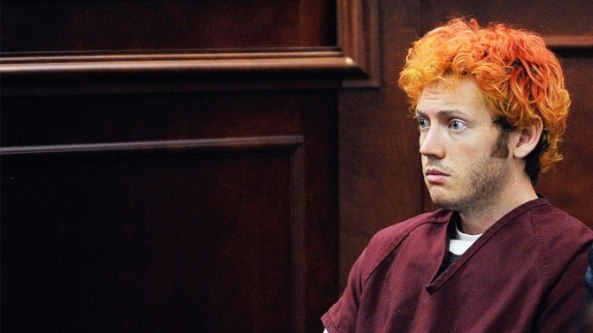
One important distinction for you crime writers out there: psychotic killers are usually “disorganized” while the psychopathic is more often “organized.” Psychotic killers are going to have a much more difficult time planning out “the perfect crime.” Not to say they can’t do some pretty extensive planning. They can. The mass murder at the Aurora, CO, movie theater involved multiple weapons, tear gas, and tactical clothing, to say nothing of the explosives rigged in the shooter’s home. That all sounds pretty organized, doesn’t it? Still, Holmes was caught in the parking lot, waiting around and watching the chaos. That doesn’t sound very logical or organized.


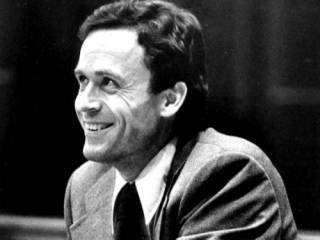
On the other hand, let’s look at the Ted Bundy, the quintessential psychopathic serial killer. He operated during the 1970s and is often described as charming and manipulative. He cared nothing for his victims and totally lacked empathy or remorse. Towards the end, he did become less organized which led to his capture and trial. At no time, however, did Bundy evidence anything like delusions or hallucinations. From what I’ve read, he maintained his manipulative behavior right up to the end.


Takeaway


What’s the bottom line here?

*   A Psychotic and a Psychopath are NOT the same.

Yes, you can have a character making the error, but I ask you, please have another character correct the error. I don’t think any one of us wants to perpetuate false information. You can use the distinction to further your story’s search for a killer (assuming you’re writing a mystery or thriller).


Suggested Assignments


  1. Develop a dialog in which one character corrects another for believing psychotic and psychopathic are the same.


  1. Develop a character who is either psychotic or psychopathic. Show the character in a brief vignette.


Feel free to ask any questions you might have. I’d be happy to help.

Narcissism

I thought this topic might be apropos given all the attention Donald Trump has been getting lately. I don’t know if he really fits the definition of Narcissistic Personality Disorder, but he still seems to have a large dose of this personality trait.

So, what does a narcissist look like? DSM-5 lists the following (see Wikipedia):  Impairment is self-functioning and impairment in interpersonal functioning). This definition is for the personality disorder. Narcissists are very taken up with how great they are and seek out confirmation of this opinion in the views of others. In my experience, narcissists very often have what’s been called “I love me” walls: Prominent displays of anything that might show the world how wonderful the person is. Included would be degrees, photos with prominent people, news clipping that mention the individual. They show little empathy for others and rarely, if ever, apologize for errors (’cause of course there’s no way I could make a mistake). Relationships are superficial and often status-based. The narcissist is often grandiose and self-important. Towards others, he or she is likely to be condescending. Narcissists are often attention-seeking and love to be in the limelight.

Does kinda sound like Mr Trump, doesn’t it? He might be a good image to hold in mind as you develop your own narcissistic character. Of course, a female character could also be a narcissist. Off-hand, I’m having trouble thinking of a good example, so feel free to leave a comment and note female narcissists. I’d love to hear your ideas.

Narcissism isn’t always a disorder. Sometimes it appears as part of other disorders, particularly anti-social personality disorder and/or psychopaths. It is also part of a healthy personality! Yes, you heard me right…a healthy person needs to have a dose of narcissism in terms of a sense of worth. Just be careful it doesn’t go too far!

Let’s talk about narcissism. I’d love to get your impressions and thoughts. These sorts of characters can be fun to develop and can make great antagonists. They can also be used in other ways in stories. What about a friend of the protagonist? or a love interest of the protagonist? Oooh, the complications!  Or…what about an alien species that is generally narcissistic? What sort of society might they develop? I’ll guarantee that it won’t look like ours!

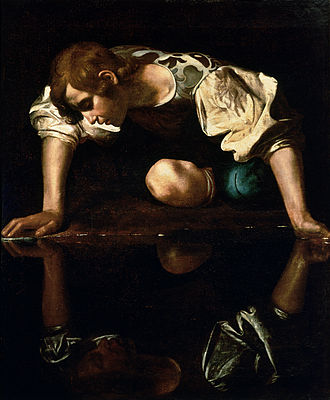
330px-Narcissus-Caravaggio_(1594-96)_edited

Impinging becomes onslaught

I know I haven’t been here very much, but things have been very difficult for me. My mother has COPD and various other ailments. After her last hospitalization a couple months ago, it was recommended that she be hooked up with hospice services. I did that and they’ve been really wonderful. The trouble is, Mother is really declining and I’m upset enough that I can’t think straight. And with all these feelings going on, writing about mental illness, particularly the article on depression that I’ve been working on…well, it’s just a bit too much for me. I know that things will chance with time and that someday I’ll be able to write about depression and various other issues for you guys. Maybe, in the interim, I’ll work on something not quite so close. We’ll see how that goes.

A character dealing with a dying parent would surely evoke strong sympathy in readers. Be sure you give such a character a strong support system or have her break down and become barely functional. There is the emotional toll that care taking a dying parent takes, and there’s also the physical demands.

More at a later time

Little research on mass murder

Ever since the mass shooting on Fort Hood on 5 Nov 2009, I’ve been interested in the psychology of mass murderers. Being the kind of person I am, I turned to Amazon, searching for books on the subject. I found a lot on serial killers and some on school shooters, but almost nothing on mass murderers. I’m not sure I understand why. It is true that many of these killers are themselves killed before any interviewing or interrogation can be done. Still, I’d think there’d be at least some information, some research into what’s going on with these folks.

Just speculating, it seems to me that the motivations are varied. There seems to be one subset that includes individuals like the killer on trial right now in Colorado who is blatantly psychotic or at least extremely mentally ill. The Virginia Tech shooter seems to have fallen into this category as well.

Then we have the subset of killers who shoot up the work-place. Oddly, I’ve seen little research into what’s going on with these folks.

There has been speculation that Charles Whitman, who shot people from the bell tower at the University of Texas in Austin so many years ago, had some brain tumor. More recently, however, I’ve read that the odds are slim that this tumor had anything to do with his behavior that day.

And now we have the shooter in South Carolina who vocalized a desire to kill African-Americans. So, “it’s a hate crime.” Toss it off with an easy generalization and be done with it. But how does a 21 year old develop such hatred and anger to end up doing what he apparently did? Putting the label on him as “racist” doesn’t really tell us much. As a writer of fiction, if I had a villain who was a mass murderer of some racial group, but didn’t go any further than characterize him as a “racist”, I’d be criticized that my character is made of nothing but cardboard, a caricature. To do that villain justice, I’d need to understand how that hatred developed and I’d need to ground this in some sort of reality about racism (or whatever it is that motivate a mass murderer).

If any of you out there have any insights on mass murderers, please make a comment or contact me. I’d love to hear from you.

“Crossing Lines”: The role of psychiatrists

Last night I watched the final episode of the tv show “Crossing Lines”. It featured a psychiatrist who had been treating a bad guy in prison for a couple years, supposedly twice a week. Now, I fully understand “poetic license” and I acknowledge that procedures in Europe are likely to be different from those followed in the US. Still and all, it struck me that this psychiatrist was supposed to be doing some sort of therapy with the bad guy. This was, of course, never specified.

I find it unlikely that a psychiatrist, who usually focuses on medication management, would be doing such therapy, whatever it was. Sure, the story needed to have the psychiatrist “fall in love” with the bad guy (or not). Or perhaps she needed to get bored or whatever it was that was supposed to motivate her. If the story needed to have a professional in frequent and protracted contact with the bad guy, why oh why couldn’t the author have specified her profession as a psychologist? It would have changed nothing to the story line but it would have made the story more plausible. She would still have been a “doctor”, carrying the status that involves. A simple change and the story would have made more sense.

BTW, the writers did handle another aspect fairly well. When questioned about the psychiatrist staying in the home of a former patient, the doc makes it clear that the friendship developed a year after termination of the therapeutic relationship. In the US, developing a personal, sexual relationship with a client is a big no-no. Really big no-no. In California, a psychologist is restricted from a sexual relationship following a therapy relationship for two years. Non-sexual relationships are not specifically mentioned. So, why did the writer’s make a big deal about this? I’m not sure but at least they were aware of the potential for an ethical problem here.

I don’t understand why the writers of this show felt that they needed to have the doc be a psychiatrist. There was never an issue about medications. Why not, then, use the profession that would have made some sense?

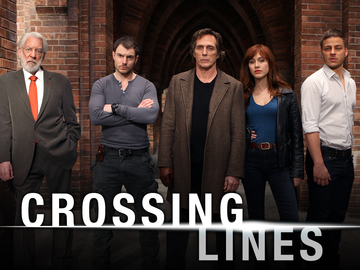
CROSSING LINES -- Season: 1 -- Pictured: (l-r) Donald Sutherland as Dorn, Richard Flood as Tommy McConnel, William Fichtner as Carl Hickman, Gabriella Pession as Eva Vittoria, Tom Wlaschiha as Sebastian Berger and Marc Lavoine as Louis Bernard -- (Photo by: Dusan Martincek/Tandem)

CROSSING LINES — Season: 1 — Pictured: (l-r) Donald Sutherland as Dorn, Richard Flood as Tommy McConnel, William Fichtner as Carl Hickman, Gabriella Pession as Eva Vittoria, Tom Wlaschiha as Sebastian Berger and Marc Lavoine as Louis Bernard — (Photo by: Dusan Martincek/Tandem)

Insanity vs mentally ill: the case of James Holmes

Apparently James Holmes has pleaded not guilty by reason of insanity. This week, copies of his notebooks were released which seem to show that he carefully selected his target (the movie theater) and also seemed to be quite aware that what he was doing was wrong. This would argue against a finding of legal insanity. He knew what he was doing and knew it was wrong.

The writings also make it clear that he was (and probably is) very mentally ill. His illness seemed to torment him, from what I’ve heard on the news. This is something I’ve seen in many of my clients over the years. Very often they know something is wrong with them but they don’t know what to do about it. I find it almost heartbreaking that Holmes seems to have studied neuroscience in an attempt to figure out what was wrong with him. I can almost imagine the despair when his studies didn’t provide him with the answers he sought.

From what I’ve gathered in the news, it seems unlikely he will be found insane by the standards in Colorado. That’s not to say that this killer isn’t sick. He most definitely is. I suppose his illness will become important again when we get to sentencing.

As an example of the difference between the legal term “insanity” and the more medical term of “mentally ill” or even “schizophrenic”, this is about as perfect as you can get.

BTW: we are dealing here with a serious mental illness like schizophrenia. We are not talking about a personality disorder or psychopathy. Please, please do not confuse psychopathy with “psychotic” or insane. Personally I do think psychopaths are “sick”, but not like Holmes. Apples and oranges, folks. Apples and oranges.

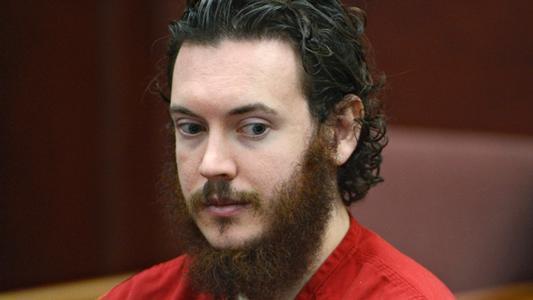
JamesHolmesColoradoShootingAndyCrossColorado theater shooting suspect James Holmes