
Writing Prompts/Exercises Continued: #11-20.

Here’s another 10 writing prompts/exercises for you. I have tried to keep them broad so they could fit with any genre. As I’ve been developing this list, I’ve realized that what I’ve got here are prompts and exercises that may help in strengthening your writing or later be folded into a complete story. If you’re working on a story now, try using these exercises with the characters in that story. If you’re not working on anything at the moment, try using these exercises to help you develop some new characters.

Again, write for only 10-30 minutes and no editing. Have fun and let your imagination run wild.

On the subject of sharing your results. I realized that since the instructions say no editing, many of you (and myself) may not feel comfortable sharing. That’s perfectly okay.

Prompts and Exercises

11.  Your character is interacting with someone who is: (Remember: show, don’t tell)

a.  Insecure

b.  Shy

c.  Narcissistic

d.  Depressed

e.  Happy

f.  Grieving

12.  Your character is chasing something/someone. (Let your imagination go for it!)

13.  Reverse #12: Your character is being chased by something/someone.

14.  Your character is talking about someone he/she is strongly attracted to, perhaps even loves, but is not really aware of the intensity of his/her feelings. Show this in the conversation.

15.  Write a short dialog, but do not use any sort of “he said/she said.” Make sure your reader can follow who is saying what. (Hint: use actions to identify the speakers.)

16. Write a short dialog, but do not use any sort of “he said/she said.” Make sure your reader can follow who is saying what. (Hint: use actions to identify the speakers.)

17. Your character is in a physical fight. Describe at least part of it.

18.   Write the lead-up to a sexual encounter. (SF writers have fun with this but be sure you understand the biology involved.)

19.  Write a sexual encounter for your character. It’s up to you how explicit. (Does your character really want this encounter?)

20.  Write the opening page of a story.


Cognitive Dissonance or How a villain sees herself

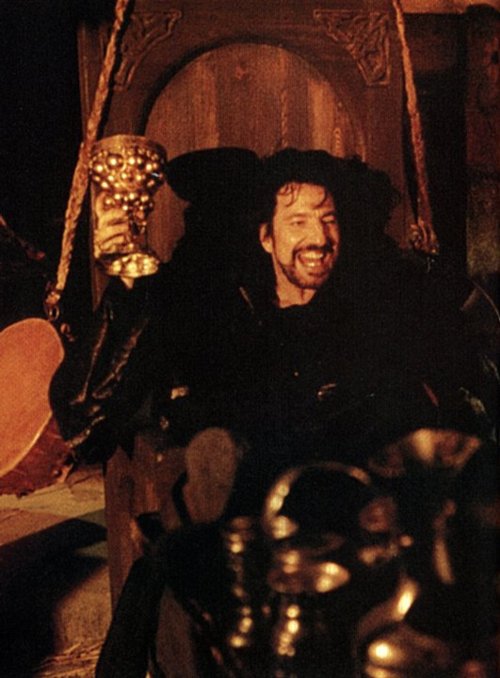
Writing a villain can be fun, particularly if you’re going for humor. Take a look at Alan Rickman’s performance as the Sheriff in “Robin Hood: Prince of Thieves.” It’s absolutely over the top. He portrays the Sheriff as totally evil. The audience ends up laughing. If you want that reaction from your readers, go for it, by all means. (Take a look at The best of Alan Rickman in Robin Hood: Prince of Thieves.)

alan rickman

The difficulty comes when we’re not writing humor. This brings us to the concept of “Cognitive Dissonance.” Back in 1957, Leon Festinger came out with a theory that posited that people strive to maintain internal, psychological consistency. In other words, we strive to make sense of ourselves to ourselves even when we maintain contradictory beliefs. For example: Your character believes himself to be a good person, but is a serial killer. To most of us, this is very contradictory. We often write off such a person as “a monster.” It reduces our own cognitive dissonance. But what about the villain herself? How does she live with herself?

There are several tactics that can be used. Your villain could simply ignore the dissonance or deny reality. She could even call the contradiction “fake news.” (Sorry, I just couldn’t resist.) She could use some sort of justification. “They deserved to die.” This seems to be fairly common across a range of horrendous behavior. The idea in reducing dissonance is to make those contradictory beliefs/behaviors somehow compatible.

Remember that few of us see ourselves as bad, evil. Some do, however.  I think this is often an issue of very poor self-esteem. Dissonance is reduced by agreeing with one side and rejecting the other. Our serial killer might just reject the idea she is basically good and accept that she is evil. I think (without any research), that she would still use some sort of justification such as genetics or upbringing. “I’m evil because it’s in my blood. I come from a long line of evil people.”

Profilers often talk about post-crime behavior as a possible tip-off. They note that after committing the crime, the perpetrator often displays a change in behavior. Maybe she starts drinking a lot, or becomes reclusive, or any of a myriad of behaviors that aren’t typical. I wonder if this change is driven by the dissonance and attempts to reduce it.

The bottom line here is that even your villain has to make some sense of herself to herself. She can do this through denial, justification or acceptance of one belief and rejection of the other. Her behavior may change as she grapples with her cognitive dissonance and this can be a tip-off to investigators or witnesses.

In this post, I have talked mostly about “villains,” but the concept applies to any and all of your characters. It applies to all people, though beliefs are likely to differ based on culture. In writing your characters, it might be helpful to try to get into the head of each of your major characters and think about how each justifies herself to herself. You might just end up with much more believable characters.


Fiction Writing Prompts/Exercises

While this is not necessarily psychology related, I thought I’d post this for all of you. This list of prompts/exercises is being developed because I couldn’t find anything like it in the various lists on the Internet. I’ve been looking for prompts or exercises to get my must awake. However, most of those prompts on the net are very restricted and/or seemed to be prompts for stories. They also didn’t work for genre fiction. I wanted a list of short suggestions that at the same time could be used no matter what genre a person is working in.

The idea for this came from a high school creative writing class. The teacher had us write about a character walking. As I remember it, there was supposed to be something distinctive about the walk and it was to be from the point of view of another character who is observing. I loved the exercise. (I must have to recall it so very many years later, even if for the life of me, I can’t recall the teacher’s name.)

In constructing this list, I thought about exercises that would help me and you develop our writing skills. I would suggest that you spend no more than a half-hour on each, though ten minutes should be a minimum. No editing. Write in what that teacher of mine called “white heat.” Just go for it.


Prompts/Exercises 1-10


  1. Write about someone walking, from the point of view of someone watching. (This was from the high school assignment.)
  2. Write a scene in which the weather figures significantly.
  3. Write a scene about a character waiting for another in a bar
    1. The bar is in a casino/hotel
    2. The bar is in a poor or working class section of town
    3. The bar is high class
  4. Write a scene in which a character is visiting a historic landmark.
    1. He/she has been there before
    2. He/she has NEVER been there before
  5. Your character is fixing a meal
  6. Your character comes across a dead body (can be anything)
  7. Without dialog, show you character feeling:
    1. Bored
    2. Angry
    3. Sad
    4. Happy
    5. Anxious
  8. What does your character see outside his/her window?
  9. For some reason, your character is unable to see. Describe what he/she can perceive.
  10. Show your character interacting with a companion animal.


When I get one of these done, I’ll post the result here in comments. If you want to  post your results, please feel free. And, of course, if you have any questions or comments, I’d be happy to hear from you.