“Crossing Lines”: The role of psychiatrists

Last night I watched the final episode of the tv show “Crossing Lines”. It featured a psychiatrist who had been treating a bad guy in prison for a couple years, supposedly twice a week. Now, I fully understand “poetic license” and I acknowledge that procedures in Europe are likely to be different from those followed in the US. Still and all, it struck me that this psychiatrist was supposed to be doing some sort of therapy with the bad guy. This was, of course, never specified.

I find it unlikely that a psychiatrist, who usually focuses on medication management, would be doing such therapy, whatever it was. Sure, the story needed to have the psychiatrist “fall in love” with the bad guy (or not). Or perhaps she needed to get bored or whatever it was that was supposed to motivate her. If the story needed to have a professional in frequent and protracted contact with the bad guy, why oh why couldn’t the author have specified her profession as a psychologist? It would have changed nothing to the story line but it would have made the story more plausible. She would still have been a “doctor”, carrying the status that involves. A simple change and the story would have made more sense.

BTW, the writers did handle another aspect fairly well. When questioned about the psychiatrist staying in the home of a former patient, the doc makes it clear that the friendship developed a year after termination of the therapeutic relationship. In the US, developing a personal, sexual relationship with a client is a big no-no. Really big no-no. In California, a psychologist is restricted from a sexual relationship following a therapy relationship for two years. Non-sexual relationships are not specifically mentioned. So, why did the writer’s make a big deal about this? I’m not sure but at least they were aware of the potential for an ethical problem here.

I don’t understand why the writers of this show felt that they needed to have the doc be a psychiatrist. There was never an issue about medications. Why not, then, use the profession that would have made some sense?
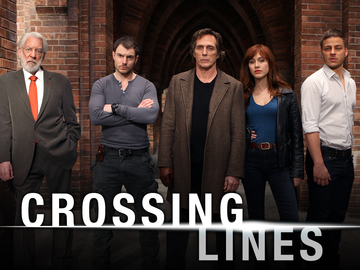
CROSSING LINES -- Season: 1 -- Pictured: (l-r) Donald Sutherland as Dorn, Richard Flood as Tommy McConnel, William Fichtner as Carl Hickman, Gabriella Pession as Eva Vittoria, Tom Wlaschiha as Sebastian Berger and Marc Lavoine as Louis Bernard -- (Photo by: Dusan Martincek/Tandem)

CROSSING LINES — Season: 1 — Pictured: (l-r) Donald Sutherland as Dorn, Richard Flood as Tommy McConnel, William Fichtner as Carl Hickman, Gabriella Pession as Eva Vittoria, Tom Wlaschiha as Sebastian Berger and Marc Lavoine as Louis Bernard — (Photo by: Dusan Martincek/Tandem)
Insanity vs mentally ill: the case of James Holmes

Apparently James Holmes has pleaded not guilty by reason of insanity. This week, copies of his notebooks were released which seem to show that he carefully selected his target (the movie theater) and also seemed to be quite aware that what he was doing was wrong. This would argue against a finding of legal insanity. He knew what he was doing and knew it was wrong.

The writings also make it clear that he was (and probably is) very mentally ill. His illness seemed to torment him, from what I’ve heard on the news. This is something I’ve seen in many of my clients over the years. Very often they know something is wrong with them but they don’t know what to do about it. I find it almost heartbreaking that Holmes seems to have studied neuroscience in an attempt to figure out what was wrong with him. I can almost imagine the despair when his studies didn’t provide him with the answers he sought.

From what I’ve gathered in the news, it seems unlikely he will be found insane by the standards in Colorado. That’s not to say that this killer isn’t sick. He most definitely is. I suppose his illness will become important again when we get to sentencing.

As an example of the difference between the legal term “insanity” and the more medical term of “mentally ill” or even “schizophrenic”, this is about as perfect as you can get.

BTW: we are dealing here with a serious mental illness like schizophrenia. We are not talking about a personality disorder or psychopathy. Please, please do not confuse psychopathy with “psychotic” or insane. Personally I do think psychopaths are “sick”, but not like Holmes. Apples and oranges, folks. Apples and oranges.

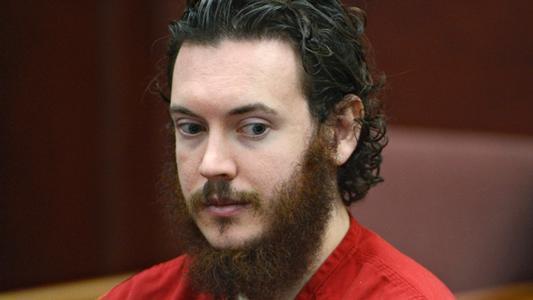
JamesHolmesColoradoShootingAndyCrossColorado theater shooting suspect James Holmes

Life Impinges Sometimes: Stress

Sorry I haven’t been around lately. It’s been a difficult month or so and I find it difficult to write about psychology and mental health problems when I’m upset and stressed myself. Guess it gets just a bit too close. I want to provide you all with the best information I can and I don’t want my own issues and difficulties to unduly slant what I write.

So, is there anything I can learn from the past couple months that I can pass on to you, my readers? Any insights that can help you develop realistic characters? I’m not sure. I’m sorting through my thoughts at this point. I can say that prolonged stress can really alter the way a character (and person!) acts and thinks and feels. Even a highly competent character can realistically be expected to have difficulties when trying to cope with prolonged stress.

This reminds my of some old research on stress. I don’t recall the researchers and I probably don’t have the details right, but when dogs were exposed to electric shock in the floors of a cage and they couldn’t predict or control what was happening, eventually they just ended up cowering in a corner. This led to the development of the idea of “Learned Helplessness.” (I know: the ethics of such research are questionable to me too.) For humans, the reaction may show up in a person (character) staying in bed, or spending all the time playing solitaire or some such game. It’s avoidance and at the same time, a giving up.

Cognitively, the thoughts may be something like “Why bother?” Thinking is difficult and feels muddied or like your character’s head is encased in cotton or molasses. It’s hard to see beyond the immediate. Of course, that tends to keep the stress going in many cases.

The stress your character is going through doesn’t have to be life threatening, like captivity and torture. I would think (I don’t know, haven’t done much reading in this area) that learned helplessness might just develop in such situations also. I would recommend if your character is in such dire straits that you do a bit of research on the effects of torture and prolonged captivity. Amnesty International might be a place to start.

So, what sort of things could set this up? Caring for an elderly, demanding parent; living in an abusive relationship; poverty and inability to make ends meet; chronic illness. The list is probably endless.