Insanity, Schizophrenia, PTSD, and Eddie Ray Routh

Just some thoughts on the trial and verdict regarding Eddie Ray Routh. Last night (2/24/15) Routh was found guilty of murdering Chris Kyle and Chad Littlefield. The defense had contended that Routh was insane at the time of the murders, but the jury clearly rejected this. I have no information regarding why the jury did so, but likely did feel that Routh “knew right from wrong” when he killed those two men. That is the standard or “test” in Texas and it does seem he knew that at least some of society would determine that what he did was wrong. Routh apparently tried to evade police in the aftermath. He ran.

It was clear (at least to me) that Routh was mentally ill. He reportedly had been diagnosed as schizophrenic by the VA. The reports of hallucinations and delusions back this up. As I will discuss in a later post(s) on PTSD, these are not, I repeat not, symptoms of PTSD. He may have suffered from PTSD as well as schizophrenia. Unfortunately, when his mother reached out to Mr. Kyle for help, she only made note of PTSD and not the schizophrenia. For a long time, the media focused on the reports of PTSD. It’s become somewhat of a fad, I’m sad to say, particularly when dealing with veterans who deployed either to Afghanistan or Iraq. It seems like Americans have become quick to label veterans of the War On Terror who have mental health problems as all suffering from PTSD and likely to become violent. It’s just not true.

Could Routh’s schizophrenia have been triggered by his deployment? Possibly, though not very likely. Could it have been a coincidence that his schizophrenia emerged during this time frame? Yes. Schizophrenia often emerges during a person’s 20s.

What’s the take-away here? I think there are a couple. First, different jurisdictions have different “tests” for calling a person “insane”. As writers, you’ll need to check the test for the state your characters are in. Second, a person can be crazy but still not be insane. This can give you a lot of tension and conflict for your story. Third, be careful when labeling your nut case. Familiarize yourself with the signs and symptoms of the various mental health diagnoses. I’ll do my best to help you with this.

Psychology and Writers: Schizophrenia (Part 1)

Schizophrenia. Yes, it does translate to “split mind”, but that doesn’t mean that we’re dealing with multiple personalities here. Instead the “split” is with reality.

The National Institute of Mental Health (NIMH) has published a nice, concise discussion on schizophrenia here: http://www.nimh.nih.gov/health/topics/schizophrenia/index.shtml. It’s a good place to start. For information on rates of schizophrenia, see the CDC: http://www.cdc.gov/mentalhealth/basics/burden.htm.

Okay, so you’re now armed with gobs of information about schizophrenia. What does that mean for your characters? A lot of mystery writers have as their perpetrator someone with schizophrenia or at least claiming to have schizophrenia. Certainly, some criminals have had schizophrenia. However, it is far more likely that a schizophrenic will be the victim of a crime rather than being the perpetrator. Schizophrenics are also much more likely to attempt suicide than they are to murder. Sure, the delusion that people are trying to kill you can lead a schizophrenic to murder. It’s just not very common at all. So, you can use your schizophrenic as victim, witness or perpetrator.

Now that you’ve decided to have a schizophrenic character, how do you portray him or her? Getting into the pov of such a character will be hard to do convincingly (at least to shrinks like me! J). Your character is likely to be hearing at least one voice that’s saying some pretty nasty things about him or her. The patients I’ve worked with never actually told me what the voices were saying, but did say that the voices were horrible in their comments about the patient. And they couldn’t turn it off!

How untreated schizophrenics think, I just don’t know. None of my patients have ever told me. My guess is that their thinking is jumbled and illogical. According to the NIMH, they have trouble with short-term or working memory. They have trouble using information to make decisions and control their behavior, so they’re likely to act impulsively. They are likely to be fearful if their delusions are of the paranoid sort*.

A few other symptoms are likely to be apparent. One of these is “flat affect”. This means that the individual shows little, if any, emotional response to the things going on around them. Be aware that the medications used to treat schizophrenia can also make the person “flat.” Conversation is likely to be limited and the patient has difficulty following through on plans.

Some patients, rather than being “flat”, do exhibit irritability. I recall one individual, who was not being treated by our clinic, who hung around the smoking area at the hospital where I worked. He appeared angry and quite intimidating. He usually tried to bum cigarettes. While I didn’t give him any (I only brought out one for myself), but I made a point to treat him politely. And he did respond to that, calming a bit and responding nicely. I think, with absolutely no proof, that his irritability was based more on what was going on in his mind. Perhaps he was angry about the voices he heard.

I’m going to end this here with the promise to write more about schizophrenia at a later time. If you have any questions or requests or comments, please let me know.

PS:

I’d like to make a couple comments about the current murder trial of Eddie Ray Routh, accused of killing “American Sniper” Chris Kyle and his friend. The family is claiming two things: that Routh was “crazy” and that he had PTSD. People with PTSD don’t have delusions about demons. They may have flashbacks in which they think they are back in a traumatic situation. Back when I was in the Air Force in the late ‘80’s, an individual came into the ER with a rifle. He believed he was in Viet Nam and that it was 1968. He was disarmed and taken to a mental health unit. This was a flashback, not a delusion. I know it’s hard to make the distinction, but it’s important. So, what’s going on with Routh? I’m not sure. It may be that there are more than one illness going on here. Or maybe just (!) schizophrenia that happened to emerge during or shortly after his deployment. He was the right age.

*“Paranoid” is not being worried or anxious or simply fearful. It’s the belief that someone(s) are plotting against you, trying to harm you.

Psychology and writing: Is my character insane?

Insanity is a term used widely, and most often incorrectly. We’ve all seen the interviews with bystanders saying some criminal had to be “insane.” We may even have had one of our characters say of another, “She’s insane!” What a layperson means is that the other person’s behavior doesn’t make sense or that the other person is mentally ill. Some people may even believe it’s a term that is used in mental health circles. They’d be wrong. The term “insane” is not a mental health term, but a legal one.

I am not a lawyer and you might want to talk with one if you plan on using the term in your work. Do realize that different states (and countries) have different definitions of insanity. Essentially, the accused is claiming that because of some mental illness or defect he or she shouldn’t be held legally responsible for his or her actions. The insanity defense is rarely used in the US and even more rarely does it result in a ruling of “not guilty by reason of insanity.” Usually it’s the defense that has to show that the defendant meets the standards for such a decision by the jury. In other words, the “burden of proof” lies with the defense.

It’s not enough to show that the defendant is mentally ill. In the early 1970s, Herbert Mullin killed 13 people. He said that voices told him that he could prevent an earthquake in California if he killed. It’s not surprising that his defense initially was “not guilty by reason of insanity.” He was hearing voices; he was clearly mentally ill. But…the jury didn’t buy that defense, primarily because he’d tried to cover his tracks and showed some sign of premeditation in some of his kills. He was found guilty instead and sent to prison. He’ll be eligible for parole in 2021, when he’s 74.

Personally, I don’t think premeditation, by itself, negates an insanity defense. I do think it is possible for a mentally ill person to plan out a crime and carry it through while still meeting the standards or “tests” for a decision of insanity. This might be a good source of some conflict for your story and an interesting cross examination of a psychologist on the stand. Attempts to cover up the crime is more problematic since it suggests that the killer knows that what he or she did was wrong.

Be sure that you don’t have your psychologist or psychiatrist making the determination that your character was insane. That’s something the jury must do.

BTW: an insanity defense is not the same as competency to stand trial. This is a separate determination and looks at whether or not a defendant understands that he or she is being tried for a crime, who’s involved, and if the defendant can assist his attorney(s) in his or her defense. It relates to the time of the trial and not to the time of the crime. You can have your defendant completely psychotic at the time of the crime, but because he’s now on his meds, he’s able to understand the trial and assist his attorneys.

A good resource regarding these issues would certainly be a lawyer. You might also want to get in touch with a forensic psychologist or psychiatrist. These individuals are often called in to develop an opinion regarding both competency and insanity.

So, how do you use this information in your story? Let’s say to have a character, Sam, who goes on a killing spree. It’s Saturday morning and Sam leaves the house carrying the shotgun he’d bought a week ago and a fanny-pack full of cartridges. Let’s say you decide to write this scene from Sam’s point of view. He’s hearing voices that tell him he must kill or he will die. The voices are screaming at him. He shoots his next door neighbor who’s mowing the lawn. He walks further down the road and shoots a passing motorist. Now the voices are encouraging him to kill more, more. Perhaps the people he passes look like some sort of demon to Sam. His own thoughts are barely coherent. Eventually the police stop him and by some miracle Sam survives. Of course to Sam, he doesn’t die because he’d carried out what the voices demanded. Perhaps Sam even surrenders. Great!

You can have the neighbors saying Sam is insane. Particularly if Sam has a history of mental health problems. Maybe the neighbors get into an argument about whether or not Sam’s crazy or just an evil monster. People do this.

You follow up with the evaluations and hearings and trial. You get Sam put on meds and within a few days, the voices have backed off and Sam realizes what’s going on. So you have a shrink determine that he’s competent to stand trial. Now for the wrangle over whether or not Sam was insane at the time of the killing spree. The defense points to a prior diagnosis of paranoid schizophrenia (more about diagnoses in following posts!) and evidence that he’d stopped his medications a few weeks previously. The prosecutor points out that Sam had the foresight to buy a shotgun and cartridges and even a fanny-pack to hold all the cartridges.

Feel free to contact me if you have questions or comments. I’m happy to help.

Update (2/13/15)

The current trial of Eddie Ray Routh, accused in the murder of “American Sniper” Chris Kyle, highlights some of the issues related to legal insanity versus being mentally ill. Kyle apparently texted that Routh was “straight-up nuts.” But police have recounted Routh’s fleeing from the scene and leading them on a chase, which might indicate that Routh was aware what he did was wrong (part of the determination of insanity in Texas). I must say that the CNN commentators I’ve seen are doing a fair job of presenting these issues.

Exposure Therapy

Caution:  Adult language!


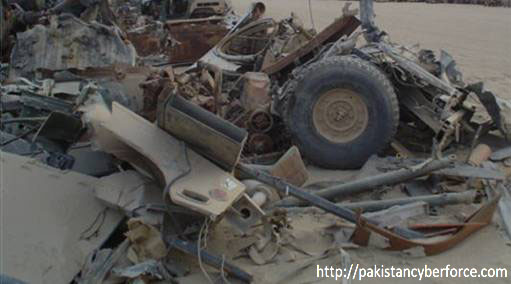
Remains of American-NATO vehicles destroyed in IED attacks in Afghanistan

Sergeant Krista Andrews’s blue eyes glistened with tears. “I should have gone on the mission, doc. I could have done something.”

The late afternoon Texas sun streamed through the office window. Dr. Mark Dowdell frowned. “What?”

She shook her head and the tears fell down her pale cheeks. “I don’t know. Something. I was their medic and I let them down.”

“I see.” Nothing like a stock phrase to buy time, the psychologist thought. He leaned back in his black swivel chair and stared at the framed Crab Nebula print.

For the past nine months, Sgt. Andrews had grappled with her survivor guilt following an attack on a convoy that had left six dead. Dowdell tried Prolonged Exposure, Cognitive Processing, even Virtual Reality therapy. Nothing worked. The young woman just wouldn’t let go of the idea that things would have been better if she’d gone on the mission.

Of course, Dowdell had one more option: send her back in time. Let her try, then bring her back. The Box might be experimental, but the theory–physics and psychology both–was solid. Since the beginning of the decades-long Global War on Terrorism, the accepted treatment for Posttraumatic Stress Disorder involved exposing the client to the traumatizing event. Sgt. Andrews’s case was a variant on PTSD, so it should work. Right?

“Sergeant, would you be willing to participate in a research program?” he asked.

#

Krista sat with the rest of the platoon in the stifling briefing room. The window air-conditioning units wailed in their futile battle against the late July sun. It’ll be worse when the monsoons start in a few more weeks, she reminded herself.

The lieutenant stood in front of a screen with a diagram of the proposed mission. The line of the Pakistani-Taliban advance hovered just north of the border between the state of Punjab and Haryana. A red streak followed back roads north to a point just shy of the front.

“Okay, folks,” the El-Tee said. “Today’s mission is to escort a supply truck to the Indian Army base on the other side of Tohana. First Squad, this one’s yours. Which medic is up?”

Everyone in First Squad groaned, while the rest of the platoon grinned. Krista felt a moment of dizziness, as if the world had just shifted a few centimeters. She shook her head to clear it.

Specialist Martinez, the platoon’s other medic, kept his hand in his lap, even though he was the one scheduled for the next mission. Uh-uhn, Krista thought, not me, not today. Martinez, you’re up. I want to go back to bed. The stocky Specialist often managed to worm his way out of going on a mission. No wonder he was such a lame excuse for a medic. An odd sense of having gone through this all before washed over her. Again she shook her head.

Martinez glanced at her, his shoulders sagging with exhaustion. Earlier, around oh-dark-thirty, Martinez had burst into their billet, shouting, “I’m a dad! I’m a dad!” He’d been awake all night, watching via Internet connection as his wife delivered their first child. Krista gave him a grimacing smile and nodded. Oh, all right. But I swear, it’s the last time I cover for you.

As her hand crept up, Krista felt the world shift again, stronger, as if displaced by a half-meter this time. “I’ll go. Let Martinez get some sleep.”

The nine-person squad, plus Krista, piled into the two sand-colored Light Tactical Vehicles and connected their uniform subsystems to the vehicles’ onboard power supply. The engines turned over and filled Forward Operating Base Sword with their teeth-chattering rumble. The first TeeVee took up position in the lead, while Krista’s vehicle slid into place behind the truck. The convoy eased past the entry control point and onto the lane leading to the main road.

From the back of the second TeeVee, Krista could see the ass-end of the supply truck through the front windshield, but not much else. The high side windows showed only the tops of ficus trees and the washed-out blue sky. At least her uniform’s micro-climate conditioning system kept her cool, though it didn’t block the stench of anxiety-spawned sweat.

As the TeeVees rumbled down the road, Krista checked the telemetry projected from the inner layer each squad member’s uniform. Body temperature, heart rate, blood pressure, hydration level, brain waves, and stress level appeared on her helmet’s visor as a list of green alphanumerics.

Staff Sergeant Carter’s blood pressure was a little elevated, reflecting her increased stress at the start of a mission. The price paid for being squad leader. The increased heart rates and quick pulses of the three newbies spoke a different kind of stress.

Specialist Khan, as usual, was dehydrated. Krista keyed her comm unit. “Khan, drink water. I don’t need a case of heat stroke.”

“Sure, doc.”

The sound of Khan slurping water from his hydration system filled Krista’s helmet. Smart ass.

Delta brainwaves from one soldier in the first vehicle told Krista that Sergeant Shephard was sleeping, again.

The chatter on the radio devolved into a background drone. Krista’s own brainwaves edged toward the drowsy theta frequencies.

The TeeVee hit a pothole and Krista felt the jar streak up her back.

“Motherfucker!” someone yelled. “Look where you’re going, shithead!”

“You want to drive, be my guest, Bates,” the TeeVee’s driver, Corporal Lujan, shouted back.

“Knock it off, soldiers.” Carter’s voice was level, almost bored.

“Like we want Lujan as gunner. The only things he can hit are potholes.”

“Stow it, Bates.” This time there was a snap to Carter’s voice.

Krista checked the squad again. Not much else to do. As a medic, she only got busy when thing went wrong and she could never wish for that. The members of First Platoon, Echo Company were hers. Her responsibility. If the shit hit the fan, she’d take care of them. How many times during her nine months in-country had that happened? Ten? Fifteen? She’d lost count. No wonder she was tired. She just hoped—

“RPG!” Bates screamed from his exposed gunner’s position. “Ambush! Ambush!”

Lujan swerved the TeeVee; Krista’s shoulder banged against the vehicle’s side.

She shifted, tried to right herself.

Noise. Light. Pain. Nothing.

 #

Specialist Jaime Martinez’s dark eyes glistened with tears. “I should have gone on the mission, doc. I could have done something.”

Who’s who is mental health

Psychologist, psychiatrist, LCSW, LFT. Have you decided you need some sort of shrink in your story but have no idea what the differences are? You definitely are not alone! The long-running tv show “Law and Order” often gets it wrong, or at least confused. Here’s a quick, handy guide to help you differentiate the different professions dealing with mental illness.

Psychiatrist

These are medical doctors who have gone through a residency* in psychiatry. Like all medical doctors, they can prescribe medication. In fact, nowadays that’s what they do the most. They do very limited psychotherapy, but do monitor how the medications are working and any side effects. In my years in practice, I often sent a client to a psychiatrist for medications. For a client or patient to see both a psychiatrist and a psychologist is common. Psychiatrists are also the ones who most easily can hospitalize a patient. The issue is whether or not they have admitting privileges at a particular hospital.

Psychiatrists have an MD after their names and are referred to as “Doctor.”

Psychologist

Psychologists have either a Ph.D., PsyD, or EdD in psychology and, if licensed, have passed an examination for licensure. Psychologist perform both therapy and assessment. The use of psychological tests is exclusive to them. Such tests include such instruments as the MMPI (Minnesota Multiphasic Personality Inventory) or (less common nowadays) inkblots. All practitioners do some sort of assessment of a patient, but only psychologists are trained in the interpretation of psychological testing.

Psychologists typically cannot prescribe medications and only occasionally have gotten hospital privileges that allow them to directly admit patients to a hospital.

BTW: EdDs typically work in school settings and are often referred to as school psychologists.

Social Workers

Social workers typically have a master’s degree, though some do progress to a Ph.D. They work in a variety of settings including hospitals and Child Protective Services. They can also have a private practice or work in organizations like the VA. They can provide diagnosis and therapy, often with entire families or couples. They cannot prescribe medications or interpret psychological tests.

Here’s a resource that might be helpful: http://www2.nami.org/Content/ContentGroups/Helpline1/Mental_Health_Professionals_Who_They_Are_and_How_to_Find_One.htm

Feel free to post a comment or question. I’m happy to help.

* A residency is supervised work, usually in a hospital, during which a doctor gains hand-on experience in a particular specialty in medicine.

Writing and Psychology: Getting your character hospitalized

So, you’ve got a character you want to get into a mental hospital. How can you do this?

  1. What disorder is she suffering from?

Coming up with a diagnosis in your head is a great way to start. Most hospitalizations are for either depression or a psychosis like schizophrenia according to the CDC. They both can lead to legitimate reasons to hospitalize.

  1. Why does she need to be in a hospital?

Not just your story’s reason, but from a mental health perspective. Nowadays, managed care and legal guidelines have been rather specific on what warrants “medical necessity” for someone being admitted to a psych unit and staying there.

The primary reasons to hospitalize are: a) danger to self, b) danger to others, and c) severe incapacity. This last can get tricky, so I’ll address it first. Essentially it means that your character can’t take care of herself…at a very basic level like feeding, toilet, etc. Personally, given the settings I’ve worked in, I have never seen this. So, you’d be better off with either danger to self or danger to others. Without searching out the stats, my guess is that danger to self is the primary reason for a person to end up on a psych unit. For “danger to self” read “suicidal.”

Voluntary admission

Okay, so your character, let’s call her Mary, shows up at the local emergency room. She’s got some minor cuts to her wrist and looks like she’s about to cry any minute. She also probably isn’t wearing make-up and her hair may look like it hasn’t seen a brush in a while. Why’s this important? Depressed people generally don’t care about their appearance and may even feel they don’t have the energy to bother with personal grooming.

r-DEPRESSION-large570

DEPRESSION-facebook.jpg

www.huffingtonpost.com

Mary is eventually taken to a “quiet” room, a room set aside for emotionally distraught folks. This is going to be a slow process, so don’t rush it. She’s likely to wait hours before being seen by a doc who medically clears her and sets up the admission to the hospital’s psych ward. A call will have to go out the to unit’s medical director, usually a psychiatrist. The psychiatrist may or may not see her in the Emergency Department. Mary will sign the forms and let herself be admitted. Her insurance will be checked. Most insurance nowadays cover mental health issues, so this isn’t likely to be an issue.

Mary is likely to be in the hospital for about 5 days. She will be placed on medications and required to attend group therapy session and various therapies like occupational therapy (usually arts and crafts). Once the doc determines that she is no longer a danger to herself, she’ll be released and told to follow-up with an out-patient doc to manage her meds. Sometimes she is referred for therapy, but this can be hit or miss.

Involuntary admission

Now, what if Mary doesn’t go to the hospital, but her husband finds her sitting on the bed, blood oozing from several small cuts to her wrist. He encourages her to go to the hospital, but she mutely shakes her head. What does he do? He calls the paramedics. The police will also get involved. These folks have the ability to transport Mary to a facility for a 72 hour hold. During this time, Mary will be examined by two physicians who will determine if she is indeed a danger to herself and needs further hospitalization. If they do determine she needs more time, but she refuses, the she is involuntarily admitted (committed), often for about 2 weeks (at least in California). Be aware that in the US, the procedures vary by state, so be sure to check!

The bottom line with an involuntary commitment is that the hospitalization is court ordered and the patient cannot leave until the court says so.

It was my experience while in California that very few individuals sent for a 72 hour hold (we called them “5150s” based on the governing statute) were kept any longer than that.

The units where an involuntary patient is held are, in the US, run by the county and are usually very crowded and chaotic. It might be difficult to get a look inside such a unit due to confidentiality laws, but if you can swing it, do so! You certainly will get an eye-, ear- and nose-ful of sensory information for your story.

For further reading on involuntary commitment see: https://www.psychologytoday.com/blog/therapy-it-s-more-just-talk/201310/involuntary-psychiatric-hospitalization

She’s been in the Hospital How Long???

According to the CDC (Centers for Disease Control and Prevention), the average length of stay in a hospital for mental illness was 7.2 days. That was in 2010 in the US. (http://www.cdc.gov/nchs/fastats/mental-health.htm). I have no reason to expect that hospital stays are getting longer. In fact, they’re likely getting shorter. A 2006 study (http://www.hcup-us.ahrq.gov/reports/statbriefs/sb62.jsp) found that the average mental health stay in a hospital was 8.2 days.

The reduction in hospital stays took off during the Reagan administration. The idea was to shift care of the mentally ill to the community instead of long-term hospitals. Unfortunately things didn’t work out quite as expected, but nevertheless the trend continues. Managed care has a lot to do with the trend now since costs are cut. Check out this article if you’re interested in what has happened with mental health hospitalizations: http://content.healthaffairs.org/content/26/6/1548.full

(A mental health hospital in Michigan: http://www.mhweb.org/wayne/reuther.htm. Not quite the idyllic image so often seen in media.)

(A mental health hospital in Michigan: http://www.mhweb.org/wayne/reuther.htm. Not quite the idyllic image so often seen in media.)

So, what does that mean to you as a writer?

First off, it means that if you have a patient hospitalized for months or years, you’ve gotten it wrong. I love the show “Criminal Minds” but Reid’s mother being hospitalized for years and years just rings false. Much more realistic would be to have her bouncing in and out of a psych ward, living off disability and struggling to make ends meet. That could easily be done by having Reid help her out financially. This would give Reid a realistic source of stress.

BTW: there is a way to have your character be hospitalized long-term. Have him found to be “insane” and set by a court to a locked mental health hospital. The truth is, the only way to get hospitalized for years and years is to commit a crime and plead insanity and be found insane. That’s how John Hinkley, Jr, the man who attempted to assassinate President Reagan, has wound up in St. Elizabeths Hospital in Washington, D.C.

Next time we’ll look closer at voluntary and involuntary admissions to a psych unit or hospital.